
Some Popular searches:
Some Popular searches:
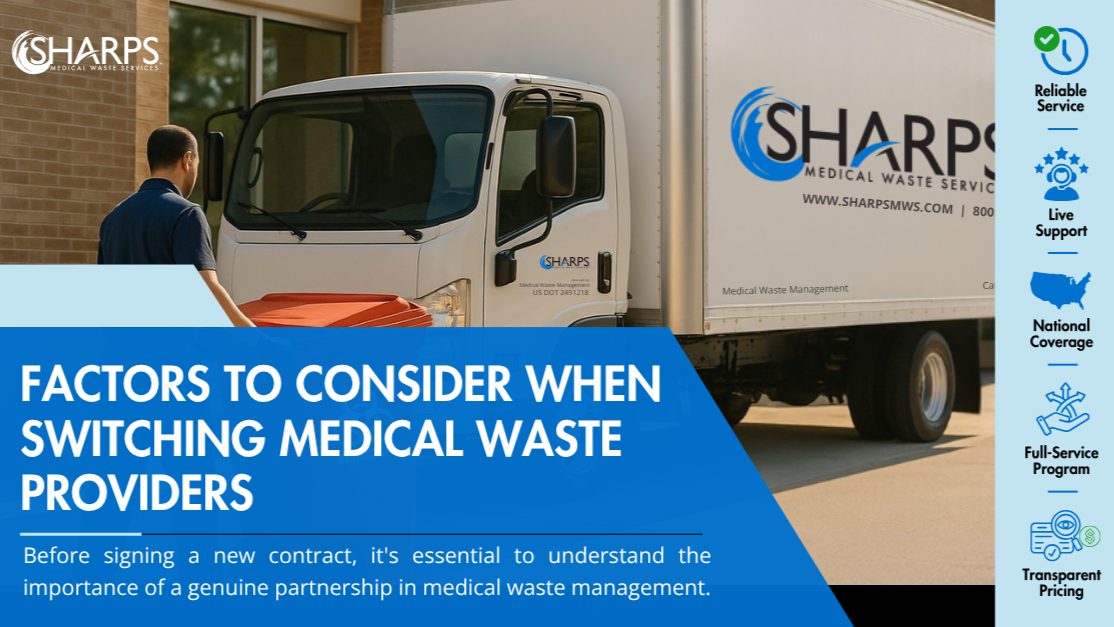
Before signing a new contract, it’s essential to understand the importance of a genuine partnership in medical waste management and the distinction between vendor and partner.
Partnership is an overused word in business. It appears in proposals, presentations, and taglines so often that it has lost its precision. Yet in highly regulated, safety-critical industries: healthcare, veterinary medicine, laboratories, mortuary services, and manufacturing, the distinction between a vendor and a true partner becomes clear the moment a problem arises.
In healthcare, relationships define outcomes. Behind every safe patient environment is a network of suppliers, contractors, and service providers who keep operations running smoothly. But not all relationships are created equal.
A vendor delivers what was ordered. A partner strengthens the working relationship

Some companies deliver what’s on the invoice and move on. Others integrate, anticipate, and stay accountable. The distinction between a vendor and a partner becomes clear the moment something doesn’t go as planned. The difference matters because the work itself carries weight. When organizations manage medical, hazardous, or bio-contaminated materials, accountability cannot be solely shared by contract alone.
Several years ago, a hospital used two different providers: one for medical waste and another for municipal disposal. Staff, after working arduous hours during peak season, accidentally disposed of regulated medical materials in the municipal waste dumpster. When the error was discovered, both vendors refused to intervene. The municipal company lacked the licensing to handle medical waste, and the medical waste company declined to collect a container it did not own.
The material sat in limbo.
The situation became a standoff in which every party could justify its position, but no one was willing to take ownership of the risk. The waste remained on-site until additional resources were brought in at significant expense and delay.
The CEO’s reflection, “everyone needs a partnership, but no one wants to pay for it,” captures the challenge precisely. Partnership often requires investment, both financial and relational, that extends beyond the written agreement. The cost of partnership is predictable, while the cost of its absence is not.
This kind of scenario is not uncommon. The U.S. Environmental Protection Agency (EPA) reports that facilities generating regulated medical waste face an average of $37,000 in fines per violation when mismanagement occurs (EPA, 2024).
When systems are fragmented, the question of responsibility becomes blurred. In critical environments, that uncertainty is a liability in itself. Incidents like these incur fines, remediation, and reputational damage that quickly exceed any savings achieved through transactional procurement. Studies by organizations such as Healthcare Without Harm indicate that hospitals implementing integrated sustainability and waste management partnerships achieve 10-20% reductions in waste-related operational costs, driven by fewer compliance issues and greater operational efficiency.
The data support what experience confirms: partnership pays for itself in continuity.
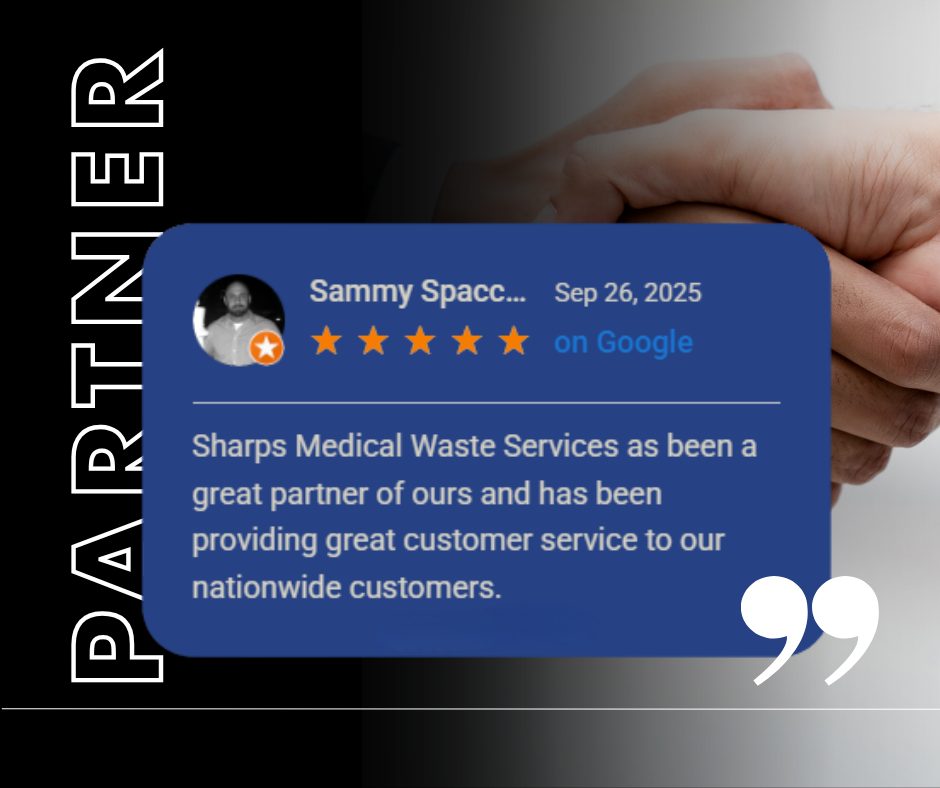
Partnership requires a different posture toward responsibility. It is not the avoidance of blame but the assumption of it. A partner recognizes that solving a problem safely and in compliance is more valuable than proving who caused it.
At Sharps Medical Waste Services, our teams have encountered versions of this scenario many times. The difference lies in our response. When similar incidents occur, we intervene, collect the compromised material, sort, weigh, tag, track, and treat every item through compliant channels. It is time-consuming and, in some cases, unprofitable. Yet it restores compliance, prevents escalation, and protects the facility’s staff and reputation.
True partnership is built on alignment and a shared commitment to protect people, reputations, and, in full transparency, the bottom line. In medical waste management, partnership means:
These principles are the foundation of sustainable operations. the kind that keep facilities prepared, even in high-demand seasons.
During the height of the 2023-2024 flu season, a regional healthcare network experienced a surge in vaccination volume that overwhelmed its disposal capacity. Container overflows, delayed pickups, and inspection concerns began to surface simultaneously across multiple locations.
When flu season peaks, you need a waste PARTNER that can withstand the rising volume.

Instead of waiting for failures to compound, Sharps restructured the collection schedule within 48 hours. Additional staff were dispatched, and route pickups were adjusted dynamically to match the increased patient throughput. Using SharpsTracer, each load was documented in real time to maintain complete traceability.
No compliance citations were issued. No waste remained unsecured. The client’s infection control officer later noted that the system “held up under pressure precisely because the partnership model allowed it to bend without breaking.”
This operational stability defines the essence of partnership. It prevents disruption not by reacting quickly, but by being deeply embedded to anticipate future challenges.
Organizations across sectors are beginning to recognize that the lowest-cost provider is rarely the most reliable one. Research from environmental and healthcare management organizations consistently shows that fragmented waste systems create greater compliance risk. Facilities using multiple vendors often face coordination gaps and inconsistent documentation. Integrated partnerships reduce compliance incidents and operational errors by improving documentation and oversight, effects widely reported in benchmarking analyses by the World Health Organization. The difference was attributed to gaps in coordination, inconsistent reporting, and unclear lines of accountability.
Partnership reduces this risk by aligning incentives. The partner’s success is linked to the client’s continuity. In contrast, the vendor’s success is measured by the completion of contracts.
This principle applies far beyond healthcare. In veterinary practices, consistent waste removal ensures compliance with both medical and environmental standards. In mortuary services, reliable handling is essential for upholding public and professional trust. In laboratories and manufacturing, timely disposal prevents contamination that can invalidate research or disrupt production.
In every case, the goal is not simply disposal, but assurance.
Sharps Medical Waste Services was founded on a simple premise: protecting people. Partnership is the model we’ve refined for more than 30 years. Our systems are designed to simplify the work of professionals across industries. They are compliant, cost-effective, and supported by teams trained to adapt in real time to changing circumstances.
We measure success not by the absence of errors, but by how effectively we help resolve them. That partnership standard has guided our work for more than thirty years and is a responsibility we choose to uphold every day.
> Thinking About Changing Your Medical Waste Provider? Connect with a Sharps Expert.
—
Sharps Medical Waste Services (MWS) is a leading, U.S.-based provider of regulated medical waste management and compliance solutions, serving healthcare facilities, pharmacies, laboratories, and businesses nationwide. The company is committed to protecting public health through safe, compliant, and reliable waste handling services, supported by rigorous regulatory standards, operational excellence, and a customer-focused service model. For more information, please visit sharpsmws.com.
Media Inquiries
(281) 901-7619
[email protected]