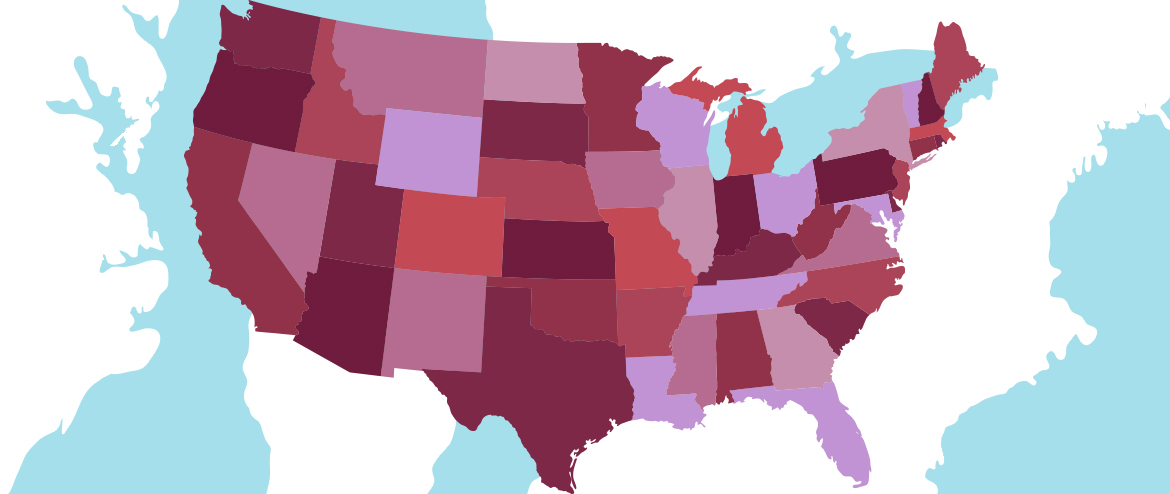
October 13, 2021 Part 2: Federal vs. State Hazardous Waste Generator Categories In Part 1 of this series, we discussed the differences between federal and state RCRA programs. In Part 2, we will talk about the different hazardous waste (HW) generator categories and why they are important. Except for Alaska and Iowa, which operate under federal jurisdiction, each state runs an approved Resource Conservation and Recovery Act (RCRA) program for managing hazardous waste. Each state’s program must be at least as stringent as the federal RCRA regulations, but they are not required to be identical. Differences between state hazardous waste programs range from small (but important) to significant. One area where variations are quite common is RCRA generator categories. What Are the Three Categories of Hazardous Waste Generators? The federal regulations have three hazardous waste generator categories. The category assignment is based upon the quantity of hazardous waste a facility generates within a calendar month. The quantities of HW listed per generator category below are per a 30-day period. Large Quantity Generator (LQG) LQGs generate: 1,000 kg (2,200 pounds) of non-acute hazardous waste 1 kg (2.2 pounds) of acute hazardous waste 100 kg (220 pounds) of acute hazardous waste mixed with debris Notes: LQGs must have an EPA identification number. There are no accumulation limits for LQGs. Small Quantity Generator (SQGs) SQGs generate: >100 kg and < 1,000 kg of non-acute hazardous waste < 1 kg of acute hazardous waste < 100 kg of acute hazardous waste mixed with debris SQGs can accumulate on-site, at any one time: < 6,000 kg (13,200 pounds) of non-acute hazardous waste < 1 kg of acute hazardous waste < 100 kg of acute hazardous waste mixed with debris Note: SQGs must have an EPA identification number. Very Small Quantity Generator (VSQG)* VSQGs generate: < 100 kg (220 pounds) of non-acute hazardous waste < 1 kg (2.2 pounds) of acute hazardous waste < 100 kg of acute hazardous waste mixed with debris VSQGs can accumulate on-site, at any one time: < 1,000 kg (2,200 pounds) of non-acute hazardous waste < 1 kg of acute hazardous waste < 100 kg of acute hazardous waste mixed with debris *Formerly known as Conditionally Exempt Small Quantity Generators or CESQGs. More on this below. Why Your Hazardous Waste Generator Status Matters Under RCRA, not all hazardous waste generators are treated equally. Large Quantity Generators (LQGs) are subject to the most stringent standards. LQG facilities must do all the following: Provide annual hazardous waste training for personnel Accumulate waste on-site for no more than 90 days Comply with RCRA air standards Store ignitable and reactive wastes at least 50 feet from the property line Submit biennial reports Develop a comprehensive written contingency plan SQGs and VSQGs are subject to fewer and may be exempt from many hazardous waste management requirements. VSQG vs. CESQG Often called the most significant hazardous waste rulemaking in decades, the RCRA Generator Improvements Rule (GIR) made major changes to the federal hazardous waste management regulations. One of those changes was to re-name Conditionally Exempt Small Quantity Generators or CESQGs. These generators are now referred to as Very Small Quantity Generators or VSQGs. In states that have not yet adopted the GIR, VSQGs may still be referred to by their “old” name – Conditionally Exempt Small Quantity Generators. As of May 1, 2021, 34 states had adopted the GIR, even though the final rule was published on November 28, 2016. By law, individual states have up to 24 months to adopt the rule. In states that have not yet adopted the GIR, regulatory authorities are discussing their options internally, drafting rules, and collecting public input. If you have questions about managing your hazardous waste, contact us for a free consultation. Read More
September 29, 2021 Part 1: Federal vs. State Hazardous Waste Classifications Last updated on October 13, 2021 In the United States, enforcing laws and regulations involves a balancing act between the federal government and individual state governments. When it comes to hazardous waste management, states can impose standards stricter than the federal governments. As a result, certain materials not regulated as solid or hazardous waste under the federal Resource Conservation and Recovery Act (RCRA) may be regulated materials/wastes under a specific state’s program. Under RCRA, Congress and the US EPA encourage each state to implement and oversee its own hazardous waste program. With the exception of Alaska and Iowa, each US state (and several territories) maintains its own RCRA program that it operates, incorporating, at a minimum, the federal rules. For the US EPA to authorize a state’s RCRA program to operate instead of federal standards, the state program must be: Consistent with the federal RCRA standards Comprehensively at least as stringent as the RCRA An individual state’s hazardous waste program may be more stringent than the federal regulations. However, a state’s program cannot be less stringent than the federal regulations. Without getting into the minutia, different federal regulations deal with the authorization and implementation of individual state programs, e.g.: US Code: Title 42 6926: Authorized State Hazardous Waste Programs Code of Federal Regulations: Title 40: Protection of Environment §271.1 In the end, some states have a broader scope of hazardous waste rules that generators within a said state must follow. Common State Differences in Hazardous Waste Classification While the federal regulations generally provide a strong foundation for state RCRA programs, a state’s hazardous waste definition commonly varies in these (and other) ways: Additional listed wastes: Industry-specific listed waste codes are typical in states where a unique industry is prevalent Polychlorinated Biphenyl (PCB) wastes Unique military wastes in states with military installations handling sensitive materials Expanded characteristic wastes: Additional characteristics such as a “lethality” or “severe” toxicity as part of the definition of hazardous waste Added criteria to an existing characteristic code definition For example, states may broaden the federal definition of corrosivity stated in 40 CFR 222 to include more than aqueous (high water) liquids and add physically solid or non-aqueous materials. They may also do any of the following: Add constituents to the table of contaminants under the toxicity characteristic Change maximum concentration levels Create a table of non-RCRA/state-regulated contaminants (e.g., for persistent and bioaccumulative toxic substances) The mixture rule: Under the federal rules, mixing solid waste with a listed hazardous waste causes the entire mixture to be regulated as that listed hazardous waste. However, federal regulations have exceptions that exclude this mixture as a hazardous waste if the hazardous waste was only listed for ignitability, corrosivity, or reactivity and the resultant mixture no longer exhibits a characteristic. A state may not allow for this exception. Universal Wastes There are five types of hazardous wastes that are regulated less stringently as universal wastes: Batteries Pesticides Mercury-containing equipment (e.g., thermometers, thermostats, and other items containing elemental mercury) Lamps (e.g., fluorescent bulbs) Aerosols Many states have added to their lists of universal wastes to include things like paint, e-waste, CRTs, and antifreeze. In some cases, there are additional requirements for state-only universal waste (e.g., paint in Texas and CRTs in California). Know Your State Rules for Hazardous Waste Management Hazardous waste generators nationwide must comply with all applicable hazardous waste regulations — both federal and state-specific ones. Because the state program may include additional, more stringent, or different requirements, generators must be aware of the requirements in their state and how they differ from the US EPA rules. In Part 2 of this series, we will review some of the more stringent rules in specific states. If you have questions about managing your hazardous waste, contact us for a free consultation. Read More