
Some Popular searches:
Some Popular searches:
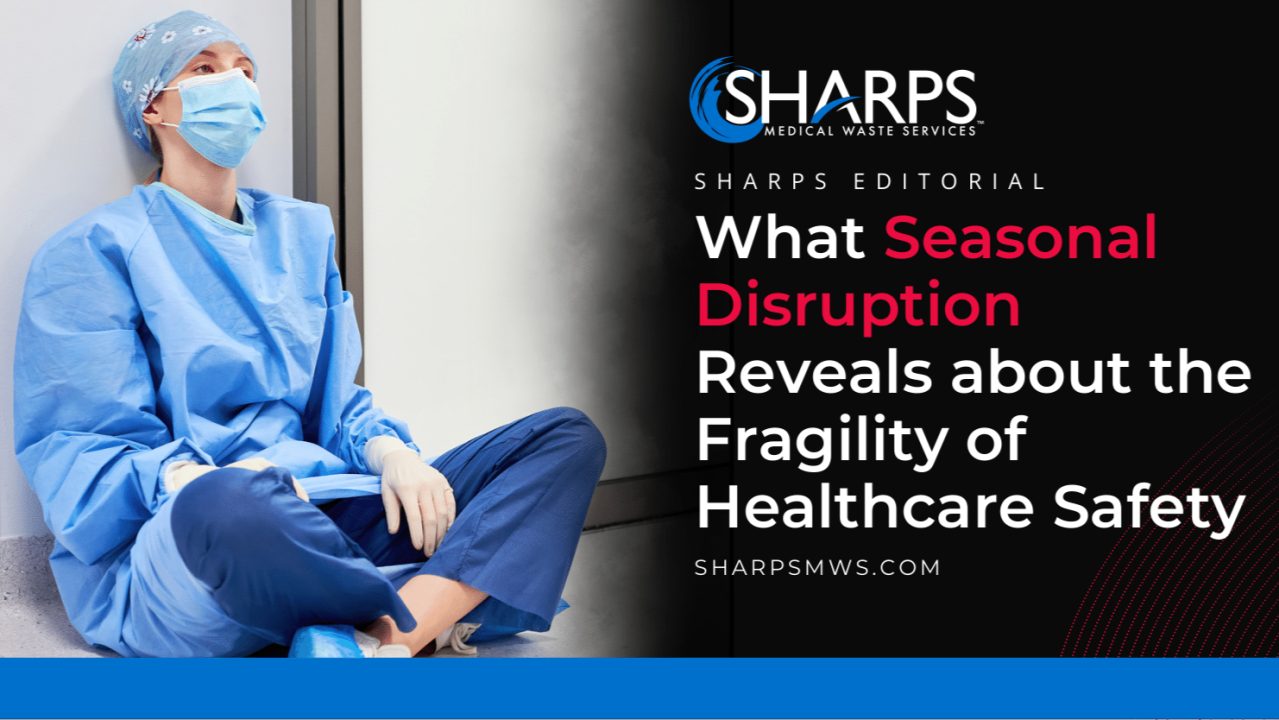
With the arrival of December comes a marked shift in how healthcare operates.
Coverage models change. Scheduling grows more complex. Essential teams stretch further to accommodate time off, rotating staff, and holiday hours. Many administrative offices close or operate with limited capacity. Yet, patient care continues without interruption, with sustained demand across every setting. Hospitals, clinics, pharmacies, laboratories, and long-term care environments nationwide remain focused on delivering care without compromise.
December also marks International Sharps Injury Prevention Awareness Month, a reminder of the everyday risks healthcare professionals manage as part of their work. While awareness has value, prevention depends on something more durable: systems capable of withstanding pressure when routines change.
Care does not pause for patients, caregivers, or the operations that support them.
The holiday season introduces variability into otherwise predictable operations. Temporary staffing becomes more common. Coverage transitions occur with greater frequency. Pickup windows tighten. Handoffs rely more heavily on clear, sustained communication. The National Institute for Occupational Safety and Health (NIOSH) has long identified fatigue, staffing variability, and workflow disruption as contributing factors to occupational exposure risk in healthcare environments. These conditions tend to surface most clearly during periods of compressed schedules and heightened operational complexity, conditions that reliably accompany the holiday season.
None of this is inherently unsafe. But it does place greater pressure on the systems designed to support frontline care.

While schedules shift, certain realities remain constant.
Regulated waste streams continue to be generated. Containers continue to fill. Compliance obligations remain in force. The Occupational Safety and Health Administration’s Bloodborne Pathogens Standard does not pause for holidays, nor do state-level medical waste regulations governing handling, storage, and disposal. Safety standards are not seasonal. They depend on consistency, particularly during periods when teams operate with less margin for error.
Risk rarely announces itself during the holidays.
More often, it accumulates quietly, in delayed exchanges, in containers left a little too long, in assumptions made during handoffs when coverage changes hands. These moments are rarely dramatic. They are routine. And that is precisely why they matter.
The Centers for Disease Control and Prevention estimates that approximately 385,000 sharps-related injuries occur each year among hospital-based healthcare personnel, many tied not to exceptional circumstances but to everyday disposal activities (CDC). When workflows are disrupted and systems are strained, the margin for error narrows. Consistency becomes more difficult to sustain, particularly in routine, high-frequency tasks.
Reliability in healthcare is often mistaken for responsiveness. In reality, it is rooted in predictability.
Clear communication. Consistent scheduling. Processes are designed to perform under pressure rather than in ideal conditions. The most resilient systems are not the ones that draw attention when something goes wrong, but the ones that quietly prevent small breakdowns from compounding. In this sense, effective waste management functions less as a visible service and more as an underlying infrastructure. When it works, it recedes from view. That invisibility is not incidental. It is the outcome of deliberate design.
Sharps Medical Waste Services ( MWS) operates with this systems-based approach across regulated medical waste, sharps, pharmaceutical, chemotherapy, and hazardous waste streams, emphasizing continuity and clarity during periods when routines are most likely to shift.
Patient safety research has long emphasized that safety is not the result of isolated actions, but of systems that anticipate variability. The Agency for Healthcare Research and Quality (AHRQ) notes that care environments are safest when processes are designed to absorb disruption, support transitions, and reduce reliance on perfect execution.
Waste management is no exception.
When supporting systems hold steady, healthcare teams are freed to focus on the work in front of them, delivering care without interruption or distraction.
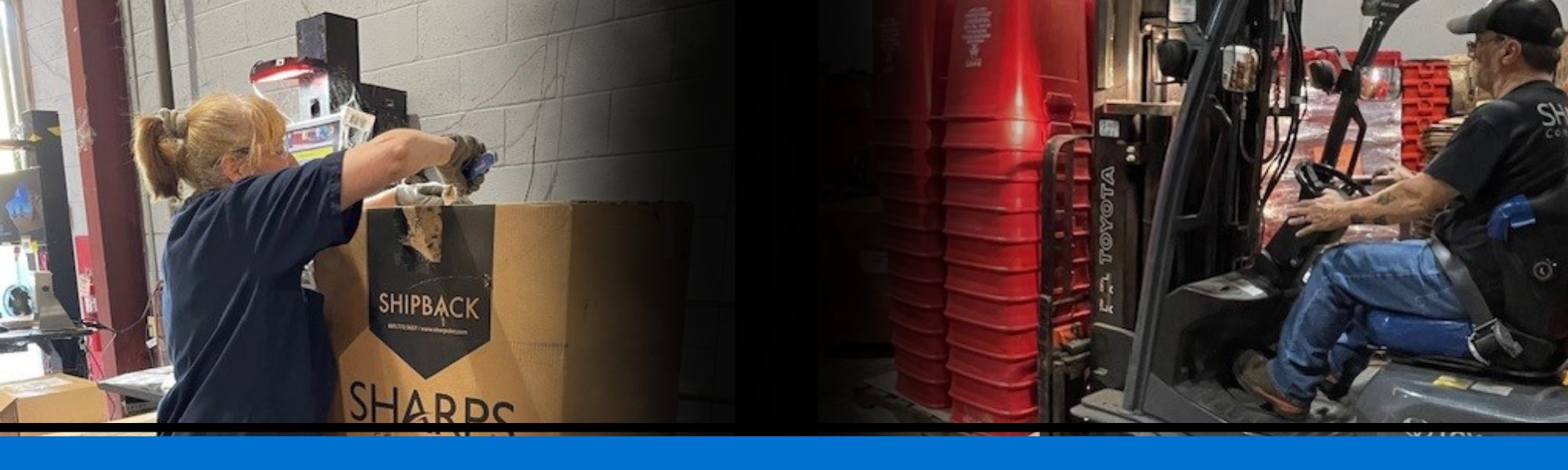
Patients experience healthcare in moments of need, demanding that the environments that protect them best are supported by systems that remain steady as schedules change, staffing shifts, and demands fluctuate. During the holidays and throughout the year, safety depends on reliability that requires minimal attention to sustain. Sharps MWS remains committed to supporting healthcare environments of all sizes nationwide with consistent service and responsive communication, season after season, wherever care happens.
—
Sharps Medical Waste Services (MWS) is a leading, U.S.-based provider of regulated medical waste management and compliance solutions, serving healthcare facilities, pharmacies, laboratories, and businesses nationwide. The company is committed to protecting public health through safe, compliant, and reliable waste handling services, supported by rigorous regulatory standards, operational excellence, and a customer-focused service model. For more information, please visit sharpsmws.com.
Media Inquiries
(281) 901-7619
[email protected]