September 22, 2020 Disposal of Controlled and Non-Controlled Medications in Long-Term Care Communities Last updated on June 14, 2021 This is an update of the article originally published on October 9, 2014. Regulations change frequently. That’s why Sharps Compliance monitors updates and communicates any changes to its customers. On September 9, 2014, the Drug Enforcement Agency published the Disposal of Controlled Substances Final Rule, which went into effect on October 9, 2014. This new rule allowed registered collectors to place DEA-compliant drug collection receptacles in long-term care facilities (LTCFs) for the collection and disposal of ultimate-user controlled substances (Schedules II-V). “Best Practices” for Medication Disposal Have Changed Many people aren’t aware that EPA guidelines and state/local environmental regulations strongly discourage many common medication disposal methods, including: Flushing medications: In addition to the EPA’s new rule, the sewering of hazardous waste pharmaceuticals is explicitly forbidden. The DEA also states that the flushing of controlled substances does not meet their non-retrievable standard for disposal. A 2013 EPA study estimated over 46 million Americans could be potentially exposed to up to 4.4 daily doses of an active pharmaceutical ingredient from their wastewater treatment plants. Other studies have shown changes in aquatic life such as gender changes in fish, due to pharmaceuticals in the water. Mixing medications with kitty litter or coffee grounds: The purpose of mixing medications with kitty litter or coffee grounds is to mask the medications, but eventually, the mixture ends up in a landfill where the pharmaceuticals can cycle back into the water. Additionally, the process is time-consuming and often messy — not the best use of a community’s best resource: nurses. Like flushing, this form of disposal likely does not meet the DEA’s non-retrievable standard of disposal. To learn more about how landfilling of medications harms both people and the environment alike, read our article on this topic. Chemical Solutions May Increase Disposal Costs Chemical solutions that break down the compounds on-site are relatively new options. These solutions are messy, release a foul odor, require nurses to remove, or “pop,” pills one at a time from blister packs or other packaging. Additionally, these methods of destruction do not meet the DEA’s non-retrievable standard, given the medication does not fully dissolve or takes days to dissolve. Anyone who has ever struggled to remove a single pill from a blister pack knows that this can be a difficult and time-consuming task. In fact, this type of disposal solution can cost a community upwards of $10,000 annually in nursing salary alone.1,2 Figure 1: After seven days, medications treated with a chemical solution were emptied into a plastic bag. The pills were removed from the plastic bag and rinsed off, but the pills were still not liquefied. Nurses must also take time to completely block out Personal Health Information on the packaging to comply with HIPAA before placing that packaging into the trash — overall, consuming even more valuable staff hours and increasing potential facility liability. Lastly, if chemical solutions are used for the disposal of hazardous waste, controlled, and non-controlled medications, then they must be disposed of by a hazardous waste provider, given the presence of hazardous waste pharmaceuticals and the unknown resulting conglomeration of waste. It causes the customer to “double pay” for disposal: once to purchase the pouch and then a second time to dispose of it by a hazardous waste provider. Sharps Compliance Offers Safe Medication Disposal Options for LTCFs Long-term care facilities can now utilize a DEA compliant drug collection receptacle or provide mailback solutions to residents for safe disposal of their medications, including controlled and non-controlled medications. Sharps Compliance has been at the forefront of safe mailback and on-site pharmaceutical collection options. We can help LTCFs safely dispose of unused/unwanted medications and stay compliant with the DEA. LTCFs have two options for the disposal of comingled controlled and non-controlled substances: collection receptacles or mailback envelopes/boxes. We offer both a collection receptacle program (MedSafe™) and a mailback solution (TakeAway Medication Return System™). As the DEA has stated, “the DEA has considered the diversion risks and determined that the installation and maintenance of collection receptacles by authorized hospitals/clinics and retail pharmacies is the most secure and responsible means by which registrants may collect and dispose of LTCF residents’ pharmaceutical controlled substances.” Collection Receptacles for Medication Disposal As outlined in § 1317.60 of the Disposal of Controlled Substances Regulations, a collection receptacle is a substantially constructed container with a permanent outer container and a removable inner liner. Collection receptacles must be securely fastened to a permanent structure, and the outer container shall include a small opening that allows contents to be added to the inner liner but does not allow removal of the inner liner’s contents. LTCFs can utilize a collection receptacle for medication disposal, provided that an authorized collector manages the program. A collector is a DEA registrant that has been approved to administer drug collection programs at an LTCF. The collector for the community is the managing pharmacy that provides medication for the residents (retail, closed-door, or hospital/clinic with an on-site pharmacy). While the collection receptacle is physically located within the community, the authorized collector will manage the program. Program management includes inserting inner liners into the collection receptacle, removing and sealing inner liners for disposal, and documenting a step log of the procedures. Note: No LTCF can operate a collection receptacle program without an authorized collector managing the program. The removable inner liners, once sealed by the authorized collector, can be stored on-site at the community for up to three business days per the DEA regulations. The inner liners are returned via common carrier to a registered treatment facility for proper destruction. With the goal of diversion as a main concern of the DEA, all steps outlined above are conducted by two people — either two employees from the authorized collector pharmacy or one employee from the authorized collector pharmacy and a second supervisory-level employee from the LTCF. Mailback Medication Disposal For LTCFs where residents manage their own medications, specially-designed mailbacks can be used for disposing of controlled substances. The resident places their medication into the mailback, seals it, and gives it to USPS for direct return shipping to the registered collector for destruction. Our 10- and 20-Gallon TakeAway Environmental Return Systems™ are optimal mailback solutions for communities where residents are managing the disposal of their own non-controlled, non-hazardous medications. To learn more about the 2014 Disposal of Controlled Substances Final Rule and options for a collection receptacle or mailback program for your communities, please contact Sharps Compliance at 800.772.5657 or visit our MedSafe website. Additionally, Sharps Compliance continues to offer both medical and hazardous waste management services. For more information on medication disposal in LTCFs, read our other articles: This white paper was co-written by Sharps Compliance and Senior Housing News: “Medication Disposal in Senior Living: Understanding New Regulations.” Our white paper, “Requirements for Long-Term Care Facilities Under the EPA’s Pharmaceutical Rule,” describes in detail how the new EPA rule affects LTCFs. In this video interview, Sharps Compliance’s Director of Regulatory Compliance discusses new EPA regulations and their implications for LTCFs. 1 Working hours per year = 2087 based on Policy, Data, Oversight. Fact Sheet: Computing Hourly Rates of Pay Using the 2,087-Hour Divisor. The U.S. Office of Personnel Management. 2 Salary estimates based on Salary Guide: Nurses 2018 & 2020 Salary Survey Results: An Elite Healthcare Resource Guide. (2018, 2020). Elite Healthcare. Read More
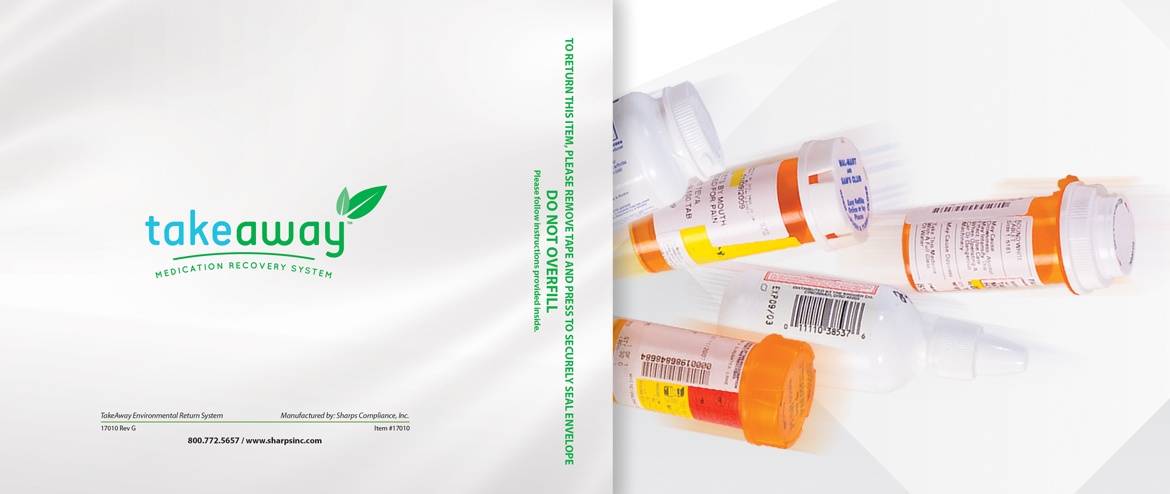
January 22, 2020 Cost-Effective Medication Disposal in Long-Term Care This is an update of the article originally published on November 3, 2015. Regulations change frequently. That’s why Sharps Compliance monitors updates and communicates any changes to its customers. Nurses practicing in senior care have very busy work schedules. From caring for residents to distributing medications and updating records, their days can become overwhelming. One of the most important tasks is the disposal of unused medication. When a resident’s medication is permanently discontinued, per the 2014 Drug Enforcement Agency’s (DEA) Disposal of Controlled Substances Final Rule, it must be properly disposed of within three business days. Prior to the 2014 DEA regulation updates, the most common ways to dispose of a resident’s medication was either flushing medications down the sink or toilet (sewering) or placing them into a drug disposal pouch and placing it into the trash. However, these options are costly, inefficient, and unsafe for the environment. Reducing costs is key to the success of any business. So, paying Clinical Directors, Directors of Nursing, and nurses up to $50/hour to pop pills out of blister packs to flush them down sinks or toilets or place them into disposal pouches is certainly not the best use of their time, skill set, and salary expense. This practice can cost a community upwards of $14,000 annually in nursing salary alone. Additionally, the ability to streamline disposal options for multiple medication waste streams can reduce the expense of managing multiple disposal solutions by over $2,700 annually. This action reduces disposal solutions from four or five solutions down to only two. Secondly, sewering drugs or placing them into disposal pouches are an inefficient use of the highest-paid staff’s time and efforts. Nursing Directors, Clinical Directors, and nurses in the long-term care setting are spending, on average, 4 hours a week removing pills from their packaging in order to prepare them for disposal, which takes significant time away from direct resident care. Also, after disposing of the pills, the staff is still responsible for disposing of the medication packaging in a HIPAA compliant manner to protect the resident’s protected health information, further contributing to time away from residents in need. Lastly, neither sewering nor disposal pouches are environmentally friendly disposal options. In August 2019, the EPA Management Standards for Hazardous Waste Pharmaceuticals and Amendment to the P075 Listing for Nicotine made it illegal to sewer hazardous waste pharmaceuticals in all 50 states due to the environmental hazards. Plus, there have been several studies published on the fact that medications are showing up in our water streams and that water treatment facilities are not equipped to remove pharmaceuticals as part of their treatment processes. Furthermore, though used drug disposal pouches are designed to be placed directly into the trash, many states have outlawed businesses from landfilling such waste since there is no way to verify the sludge contents within the pouch, which has implications for leachate and its impact on the environment. So, businesses not only pay for the pouches themselves but then must pay a second time to dispose of the pouches as regulated or hazardous waste, which is extremely costly. Fortunately, thanks to the promulgation of both the DEA and EPA rules, there are more efficient, environmentally safe, and cost-effective methods to dispose of controlled, non-controlled, and hazardous waste pharmaceuticals (HWPs) upon adoption of the new EPA rule by each state. The first is the use of a DEA-compliant drug collection receptacle like our MedSafe. With MedSafe, there is no need for your highest-paid employees to spend their time popping pills for disposal. Rather, you simply dispose of the blister pack or pill bottle full of controlled, non-controlled, or HWPs (once the state has adopted the new EPA rule) into the securely locked collection receptacle, which provides the extra benefit of reducing the possibility of diversion. Once the inner liner is full, it is sent directly to our treatment facility via prepaid postage by common carrier. Upon receipt, all liners are incinerated, meeting the DEA and EPA disposal standards. Plus, since all contents are incinerated, the resident’s protected health information is destroyed in a HIPAA compliant manner. Like MedSafe, the DEA also allows for individuals to utilize mail-back envelopes, like our TakeAway Medication Recovery System Envelopes, in their home to dispose of their unwanted medications, controlled and non-controlled, via USPS. An individual simply takes the nondescript envelope, fills it with their unwanted medication bottles and blister packs, seals the envelope, and places it in the mailbox or gives it to the mail carrier. With the prepaid postage, the envelope is sent directly to our treatment facility, where it is incinerated – again, meeting the DEA and EPA destruction standards as well as HIPAA. By using MedSafe or TakeAway Medication Recovery System Envelopes, communities will not only remain compliant with DEA, EPA, and HIPAA, but they also save long-term care communities money, potentially as much as $17,000 annually, with the reduction in the various expenses related to medication disposal. Additionally, these easy, efficient, and time-saving methods of disposal will give nursing staff their valuable time back to care for residents rather than spending their time popping pills out of blister packs. Contact us today at 800.772.5657 to learn more about how we can help your community save money on medication disposal. Read More
March 27, 2019 How MedSafe & TakeAway Systems Support Sustainable, Safe Drug Disposal In 2008, public health officials were startled when water quality studies found that 46 million Americans had trace amounts of pharmaceuticals in their drinking water. They noted that many localities didn’t test drinking water for pharmaceutical residues, so even more people could potentially be affected. These findings led to calls for more testing, public education, and safer, more secure drug disposal options. Sharps Compliance is a leader in this effort. Our drug collection systems – MedSafe collection kiosks and TakeAway Medication Recovery System envelopes – offer ultimate users the convenience of authorized collection, DOT-permitted return transportation, and proper destruction. Improper Drug Disposal Endangers Public Health & Environment Anyone who has ever taken a pre-employment drug test knows that trace amounts of drugs can be excreted in urine. That may seem like an amount too small to make a difference, but prescription drug use is rising sharply in the US as the population ages. The number of prescriptions filled rose 85% between 1997 and 2016, to 4.5 billion individual prescriptions. Many households still flush unused/unwanted medicines down the toilet, which sends them full-strength into the water treatment system. This is not the ideal disposal method: the Food and Drug Administration now recommends that only 13 medications (mostly opioids) be flushed down the toilet, and then only if no safe disposal option is readily available. Drugs disposed in household trash may be stolen or accidentally poison children and pets. If the medications make it to the landfill, they may contaminate groundwater. A US Geological Survey of 22 landfills found that landfill leachate was contained with pharmaceutical residues including amounts of anesthetics, muscle relaxants, and anticonvulsants. Water contamination can have serious effects on wildlife and the environment: Antidepressants in water are “changing the behavior of wild animals.” Cocaine contamination in the Caribbean Sea is damaging the Great Maya Reef. Researchers are concerned that pharmaceutical and other chemical residues in water could be causing reproductive changes in fish after studies found a high number of male smallmouth bass had female egg cells growing in their testes. Local governments, health experts, law enforcement, and others are working together to educate the public and provide safe, affordable drug disposal options. Sharps Compliance is an industry leader in that effort. TakeAway Medication Recovery Systems We introduced our TakeAway Medication Recovery Systems in 2009 as a convenient way for ultimate users to immediately dispose of unwanted or unused medications. The TakeAway containers are an affordable DEA-compliant option for disposal of most medications: Over-the-counter pharmaceuticals, such as sleep aids and analgesics Non-controlled prescription drugs like antibiotics and allergy medications Controlled medications – Schedules II-V only (no Schedule I) Simply follow the instructions with the container and return it to Sharps Compliance via US mail or UPS for safe, secure disposal and destruction. MedSafe Drug Collection Kiosks Since 2014, Sharps Compliance has partnered with many stakeholders, including law enforcement agencies, retail pharmacies, and healthcare facilities, to place MedSafe drug disposal kiosks across the country. As of December 2018, ultimate users had deposited over one million pounds of unused/unwanted drugs into MedSafe kiosks. MedSafe is a comprehensive medication collection and disposal solution that meets the requirements of the DEA Controlled Substances Final Rule. The secure kiosks come in two sizes and help ultimate users safely dispose of both controlled (Schedules II – V only) and non-controlled pharmaceuticals. Ultimate users can bring unwanted medications to the kiosks and deposit them at no cost, without waiting for a community drug take-back event. Safe, Sustainable Disposal Via Incineration Sharps Compliance is an industry leader in our approach to environmental sustainability. We strive to be a zero-landfill company. For example, when medical waste is sent to our treatment facilities, it undergoes a process to render it harmless before it’s converted into energy. Our patented Waste-to-Energy (WtE) Conversion Process helps divert waste from landfills and reduce greenhouse gas emissions. We are just as committed to the safe, sustainable disposal of pharmaceuticals. The 2014 DEA Disposal of Controlled Substances Final Rule required that an authorized collector manage the collection and transportation of ultimate-user medications via a returnable inner liner system. After drugs are collected, DEA requires that drugs must be treated to render them non-retrievable. The EPA cites incineration as the safest and most effective way to dispose of unused pharmaceuticals. High-temperature incineration meets both DEA requirements and EPA recommendations. Pharmaceutical incineration in a WtE facility is a win-win for the environment. It diverts potentially dangerous drug waste from landfills and turns it into clean energy. Sharps Compliance’s patented inner liner solutions allow waste-to-energy conversions from safely disposed of pharmaceuticals. MedSafe is a complete solution that helps generate renewable energy and remove ultimate-user medications from the waste stream. When ultimate users deposit unwanted pharmaceuticals into MedSafe kiosks, they’re helping protect their families, communities, and the environment. Contact us today at 800.772.5657 to learn how we can help you safely dispose of unused/unwanted pharmaceuticals. Read More
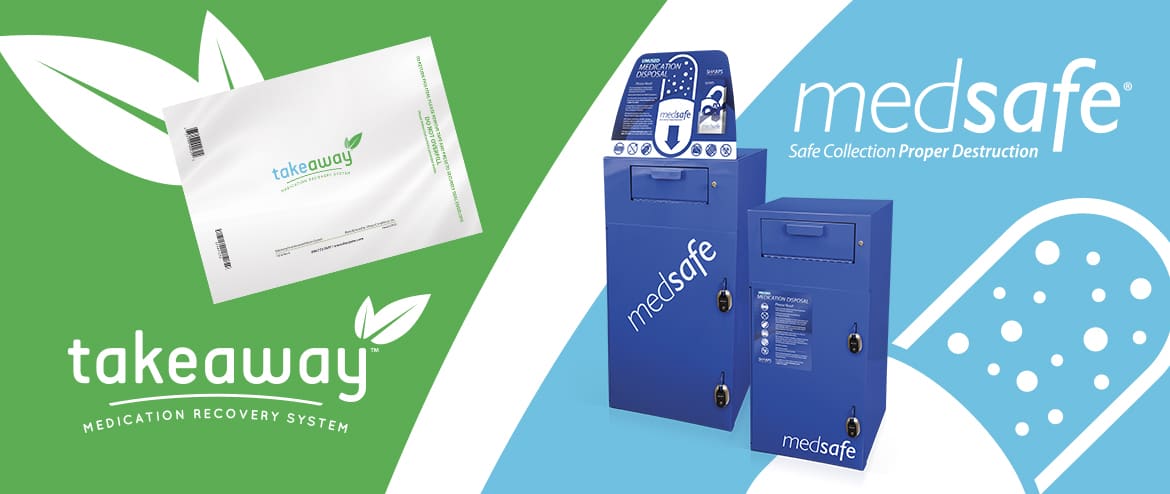
October 12, 2017 National Drug Take Back Days Raise Awareness About Safe Prescription Drug Disposal Methods Last updated on October 30, 2019 On October 28, 2017, local communities across the county will participate in the 14th “National Prescription Drug Take Back Day“. The Drug Enforcement Administration and local law enforcement organizations coordinate Take Back Day events every April and October. The goal is two-fold: reduce the potential for misuse of unused prescription medications and educate the public about safe drug disposal methods. In April 2017, 5498 drop-off sites collected 450 tons of prescription medications. This record-setting collection reflects the public’s increasing participation in proper drug disposal as their awareness of the dangers of improper drug disposal grows. Unused Prescription Medications May Contribute to Drug Abuse A 2015 study conducted by the Substance Abuse and Mental Health Services Administration found that 60% of adults who report misusing opiods didn’t have a prescription for the drugs. It also found that 38% of adults had an opiod prescription at some point in 2015 and that many didn’t consume the entire prescription: The major culprit behind the misuse is excessive prescriptions, the survey found, with doctors providing patients with too many pills for too long. After delivering a baby, for example, women typically use half of what they’re given, said Stephen Patrick, a Vanderbilt University neonatologist who was not involved in the study. Prescription drug use among teens increased 33% between 2008 and 2012, with 24% of high school students reporting that they had abused prescription medications. Teens often view prescription medications as being less dangerous than “street drugs,” possibly because they see their parents taking them. 56% of teens who misuse prescription medications get them out of the medicine cabinet at home. A 2012 study found that 85% of young injection drug users used opiod painkillers non-medically before moving on to heroin. The most common methods for obtaining opiods were family, friends, and their own prescriptions. What seems like harmless experimentation can lead to lifelong struggles with addiction. Unused medications can represent a real danger to other family members and the community. Dangers of Unsafe Disposal Methods As the public learns more about the dangers of keeping unused medications in the home, safe drug disposal becomes a more compelling issue. Currently, the two most common disposal methods used by consumers – flushing drugs down the toilet and putting them in the trash – can contribute to health and environmental safety problems. Accidental poisoning: Medications placed in trash containers may represent a danger to children and pets. The Journal of Pediatrics reported in 2012 that over half a million children aged 5 and up are “exposed to pharmaceuticals in a potential poisoning event” each year. 95% of these events are due to “self-exposure,” meaning that children came across unattended medication and sampled it on their own. In 2016, “human prescription medications” topped the list of the ASPCA’s annual list of “Top Ten Pet Toxins.” Drug abuse: Addictive drugs change the way the mind works and exert a powerful force as the brain craves the euphoric feeling the drugs can produce. People will do almost anything to get it – even if it means taking drugs out of trashcans. Water and wildlife contamination: Levels of pharmaceutical residues in wastewater have risen in recent years, but studies of the health and environmental affects show mixed results. Levels are increasing as the overall population consumes more prescription medication. However, scientists report that a substantial percentage of residue in the water supply is due to intentional disposal down sinks and toilets. Conventional wastewater treatment facilities aren’t designed to remove many trace-level contaminants including pharmaceutical residues, leading to concerns about unintentional consumption by both humans and animals. Poisoning, abuse, and environmental contamination were all issues that promoted the establishment of National Drug Take Back events. Find an event near you or get more drug disposal information at the DEA Web site. Challenges of Routine Pharmaceutical Disposal The “take back” events allow individuals to dispose of prescription drugs only twice a year. There is a need for more routine disposal options. Organizations, such as retail pharmacies and law enforcement agencies, can play a part in helping their communities dispose of medications throughout the year. Sharps Compliance offers two efficient and easy-to-manage DEA-compliant disposal options: Sharps’ MedSafe Medication Disposal System. This DEA-compliant medication collection kiosk can be placed in DEA collector locations, such as retail pharmacies, hospitals and clinics with on-site pharmacies, and long-term care facilities, as well as narcotic treatment programs and police stations. Each kiosk is made of 14-gauge powder-coated steel and comes with serialized, pre-addressed, prepaid, leak-proof inner liners. Consumer unused drugs are deposited into the kiosk where they fall into the liner. When the liner is full, the location ships it back via UPS to Sharps Compliance’s DEA-approved facility for destruction. Takeaway Medication Recovery System: This USPS-mailback option is designed for individual consumer use and small organizations such as hospices. The mailback envelopes are designed for small quantities of an individual’s unused medication. For larger quantities, our specially-designed boxes are available. Users mail the prepaid, pre-addressed envelopes and boxes via USPS to Sharps’ DEA-approved facility for destruction. Sharps Compliance is proud to offer safe, convenient pharmaceutical disposal solutions to institutions as well as individuals. We encourage all households to participate in National Drug Take Back Day events. However, we understand that many organizations and individuals require more robust disposal options. Let us help you find the right DEA-compliant pharmaceutical waste disposal solution for your needs. Read More
September 14, 2017 Industry & Communities Meet the Challenge of Safe Prescription Drug Disposal Americans are taking more and more prescription drugs, both legally and illegally, and communities across the country are struggling to deal with the health, financial, and environmental effects. A particular hot-button issue is the safe disposal of expired and unwanted medication. Currently, stakeholders including pharmaceutical manufacturers, product stewardship organizations, federal, state, and local governments, individual pharmacies, and other healthcare entities are working to develop solutions. Medical waste disposal companies who are also reverse distributors like Sharps Compliance are playing a major role to assist these groups in the proper containment, transport, and destruction of unused pharmaceuticals. _x007f_Prescription Drug Addiction Is an Epidemic While the cost of collection may seem high, so does the cost of doing nothing. Millions of Americans abuse prescription drugs. Thousands die every year from overdoses. Between 2000 and 2015, more people died from overdoses of commonly prescribed opioids than from heroin. In 2010, one in 20 people aged 12 and over reported that they used prescription drugs for non-medical purposes. In addition to the cost of life, there are increased community costs including additional law enforcement as well as increased demands on the health and foster care systems. People with substance abuse problems are often less productive at work/school and suffer both mentally and physically. The effects ripple throughout entire families and communities. Health and Environmental Hazards of Improper Drug Disposal Besides the personal and social costs of addiction, there are also environmental concerns. At this point, there is uncertainty about the effects of low-level drug contamination in the water supply, but levels are rising along with the increased use of prescription medications due not only to excretion, but from community residents flushing medications. Moreover, waste water treatment plants are only able to remove approximately half the prescription drugs contained in sewage. Prescription Drug Disposal Solutions Drug manufacturers also recognize the problems caused by improper disposal and are taking independent action. In 2014, the nation’s largest industry trade group, Pharmaceutical Research and Manufacturers of America, launched an informational website, My Old Meds, to educate consumers about the importance of safe storage and disposal. Counties and cities across the country are passing extended producer responsibility laws for pharmaceuticals. While local governments consider mandatory take-back programs, there’s also the possibility of federal regulation. Although a federal standard for collection and disposal of unwanted and expired pharmaceuticals would impose more order and certainty, Congress is unlikely to act on the proposal anytime soon. Many individual communities sponsor regular Drug Enforcement Agency (DEA) National Drug Take-Back Days, but publicizing and collecting from individual households is logistically difficult. The DEA, in response to the Secure and Responsible Drug Disposal Act of 2010, amended the Controlled Substances Act to provide extended collection options in 2014. This rule update allows retail pharmacies, manufacturers, drug distributors, reverse distributors, narcotic treatment programs, long-term care facilities, and hospitals/clinics with on-site pharmacies to set up drop-off kiosks or provide mailback systems for the collection of unused drugs, including controlled substances, from residents. Previously, only law enforcement personnel were allowed to collect controlled substances. Medical waste disposal companies that are reverse distributors are responding. For instance, Sharps Compliance offers secure, affordable drug collection kiosks and has collected and disposed of over 1.7 million pounds of unused medications over the last five years. Sharps offers two DEA-compliant options: MedSafe Medication Disposal System: This powder-coated steel, DEA-compliant medication collection kiosk is available at DEA-authorized locations for disposal of ultimate user controlled and non-controlled drugs. It comes with serialized, pre-addressed, prepaid, leak-proof cardboard inner liners. Since the liners are shipped via common carrier, they are only removed once full – making this option very efficient and cost-effective. The liner is shipped to Sharps’ DEA-approved facility for destruction. Takeaway Medication Recovery Systems: Designed to allow safe disposal of ultimate user drugs, the Takeaway Systems consist of mailback envelopes for small quantities of an individual’s medications or specially designed boxes for larger quantities, such as hospice care. Unused drugs are placed in the prepaid, pre-addressed envelope by the ultimate user or long-term care provider prior to mailing directly to Sharps’ DEA-approved facility with on-site destruction. Sharps Compliance’s all-in-one collection, transport, and destruction MedSafe and Takeaway Medication Recovery Systems are an immediate answer to the growing demands for increased accountability and assistance for consumers in the effort to keep their families, environment, and communities safe. Read More
December 1, 2015 Preventing Prescription Drug Abuse at Home Last updated on May 6, 2019 Prescription drug abuse is a growing epidemic in the United States. Opioids, depressants and stimulants are the most abused medications. According to the Los Angeles Times_x007f_, the leading cause of death from unintentional injuries in the U.S. is drug-related poisonings, which has surpassed automobile accidents. Between 1999 and 2006, deaths from drug poisoning have almost doubled. The first step towards preventing drug abuse is proper medication disposal. In recent years, prescription drug abuse has increased because prescription drugs are more readily available. Drugs are prescribed more often due to “patient advocacy groups, the development of new formulations of opiate analgesics to meet this demand, and increased marketing of opiates by pharmaceutical companies.” Vicodin is one of the most prescribed medicines in all drug categories. Even though doctors prescribe prescription pain medications, that does not mean that they are “safe.” If pain medications are not taken as instructed, they can lead to dependence and possibly heroin use. One out of every fifteen people who use non-medical prescription pain relievers will try heroin within ten years. Heroin is generally easier and less expensive to obtain. Unused or expired medicine that is not properly disposed of puts people at risk. Sharps has supplied solutions for ultimate user medication disposal since 2009, beginning with the TakeAway Environmental Return System Envelopes. Our solutions have safely removed hundreds of thousands of pounds of unused medications from users’ homes. For pharmacies and drug stores wanting to provide a solution to their customers for disposing of unused medications, Sharps Compliance offers TakeAway Medication Recovery System Envelopes. These prepaid, tamper-evident envelopes allow comingled collection and disposal of controlled (Schedules II-IV) and non-controlled medications. This DEA-compliant service is easy to use. Once envelopes are filled with medications, users seal the envelopes and mail them back with a prepaid USPS label for proper, DEA-preferred destruction. These envelopes are available in a few different options: 25 envelopes in a counter display or 12 individually-wrapped envelopes with or without a counter display. This product drives foot traffic to retail pharmacies and offers pharmacists an opportunity to discuss medications with their customers, improving business. Read More
July 28, 2015 Part 2: Preventing Prescription Drug Abuse Last updated on May 6, 2019 In our last blog post, we explored how prescription drug abuse has become an epidemic in the United States. This week we will discuss how to prevent prescription drug abuse and what to do with any unused medications. Many opioid abusers get the prescription drugs from friends or relatives for free, according to a study by JAMA Internal Medicine. Other sources include getting a prescription from one or more doctors, stealing or buying prescription drugs from friends or family and buying prescription drugs from drug dealers.1 It’s important to store your medicines safely around your house in order to prevent drug abuse. Below are some tips for protecting your friends and family, courtesy of the Alliance for Balanced Pain Management: Note how many pills are in each bottle, pay attention to your refills and follow instructions regarding the correct doses. Only take your medications, no one else’s. Store your medicines in a safe place that only you know about. Keep them out of sight and out of reach. Discuss with your family and friends everything you’ve learned about storing and discarding medicines.2 Another important step in preventing prescription drug abuse is to dispose of your unused medicines properly. Many communities host drug take back events, in which you can drop off any unused medications. Check with your city government to see if such an event is available. You may also mix pills with cat litter or coffee grounds to make them undesirable. Then put the mixture in a disposable container with a lid or sealable bag and throw it in the trash.3 Some pharmacies have collection receptacles (e.g., MedSafe) in which you can dispose of controlled and non-controlled medications. Also you may purchase mailback envelopes. You may put any unused medications in these preaddressed, prepaid envelopes and drop them at your nearest mailbox or post office. Sharps Compliance offers a version called the TakeAway Medication Recovery System Envelope. With prescription drug abuse on the rise, it’s imperative that you do everything you can to safely store and dispose of any unused medications. 1 Sources of Prescription Opioid Pain Relievers by Frequency of Past-Year Nonmedical Use 2 Are You the Only One Taking Your Medicine? 3 How to Dispose of Medicines Properly Read More