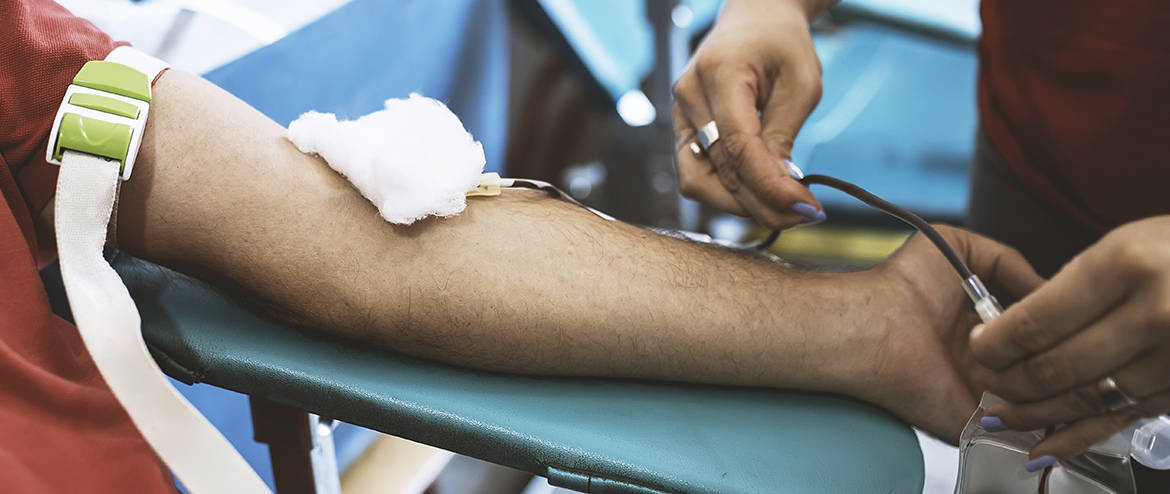
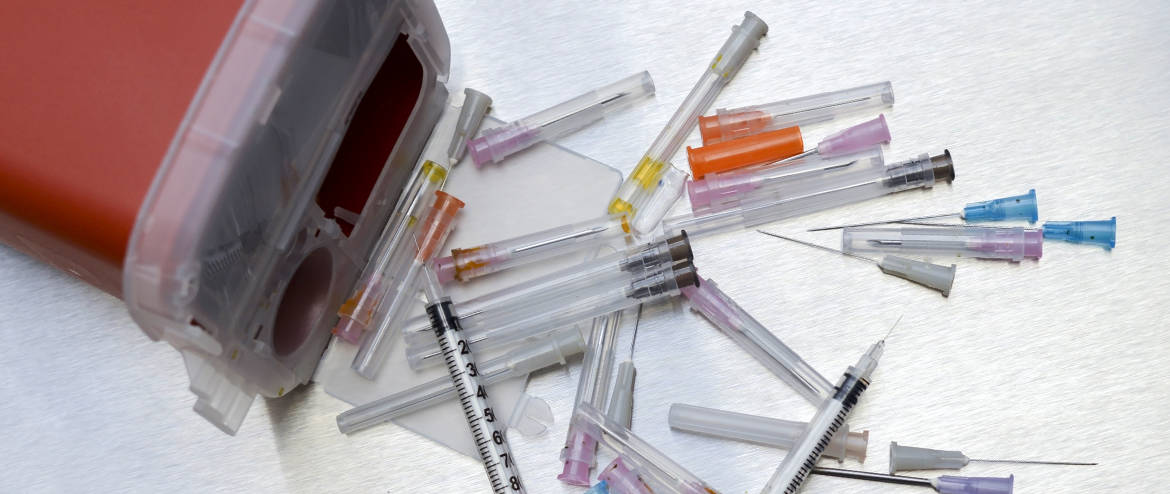
August 31, 2022 Medical Waste Disposal in Blood Banks Blood banks play a critical role in healthcare by collecting, storing, and distributing blood for patients needing transfusions. Each day with each patient, blood banks generate regulated medical wastes (RMW), so safety must be a priority. Due to the generation of RMW, employees must receive training such as OSHA Bloodborne Pathogens, DOT, and other federal and state-mandated requirements. This training helps blood banks maintain workplace safety and avoid potential fines and penalties. RMW Wastes Generated at Blood Banks Blood and blood products can transmit serious diseases, including Hepatitis B & C, HIV, and malaria to name a few. Because of the dangers involved, the donation, handling, labeling, storage, and distribution of blood and blood products is regulated by multiple agencies, including OSHA and the FDA. To keep blood donation safe, new sterile equipment is used for every donor, so there’s no chance of any donor being infected by a bloodborne pathogen. The many precautions taken to guard against infection mean that each step of the donation process generates regulated medical wastes. Types of RMW generated at blood banks during the screening and collection processes include: Sharps waste from the initial hemoglobin test. All donors undergo a preliminary screening prior to the actual donation process. Waste from the pre-collection testing process: Before blood is collected for donation, it’s collected into tubes for screening. Waste from the donation process. The actual blood, plasma, and/or platelet donation generates medical waste in the form of tubes, sharps, and collection bags. Blood/Blood products: Sometimes the blood/blood products collected are unusable for various reasons and must be disposed of too. This waste is classified as “red bag waste,” which must be placed in secure containers for proper disposal and treatment. An RMW transporter, such as Sharps Compliance, would need to be utilized to come to your blood bank to pick up the waste for the most cost-effective and compliant management of your RMW per federal and state regulatory requirements. Additionally, Sharps Compliance offers our proprietary online waste tracking program, SharpsTracer, where the generator can see when waste was received, its weight, and the certification of destruction. Safety & Compliance Training for Blood Bank Staff Disposal costs for regulated medical wastes are much more expensive than costs to dispose of general and recycling wastes. Thus, keeping all non-RMW waste out of red bag containers is important. Proper staff training not only helps you comply with regulations but can help you save money on RMW disposal costs. OSHA’s bloodborne pathogens and needlestick prevention standard outlines the proper use and management of sharps and how to reduce the potential for employee needlesticks and exposure incidents. To reduce or eliminate the danger of exposure to bloodborne pathogens and needlestick injuries, employers “…must implement an exposure control plan for the worksite with details on employee protection measures. The plan must also describe how an employer will use engineering and work practice controls, personal protective clothing and equipment, employee training, medical surveillance, hepatitis B vaccinations, and other provisions as required by OSHA’s Bloodborne Pathogens Standard (29 CFR 1910.1030).” Learn more about OSHA compliance: Sharps Safety Under OSHA’s Needlestick Prevention & Safety Act Medical Waste Management Under OSHA’s Bloodborne Pathogens Standard Every blood bank team member who may come into contact with blood products or other contaminated items must receive safety and compliance training. Employees may need training in one or more of the following areas: OSHA Bloodborne Pathogens Hazard Communication HHS-Compliant HIPAA training DOT training required for packaging and manifesting regulated medical waste Hand Hygiene Sharps Safety Training PPE Sharps Compliance Can Help When your employees are ready for training, we’re ready for them! Our online training system, ComplianceTrac, is available 24/7, so individual staffers can access required training on their schedule. The system’s in-depth training videos allow employees to train in typically less than an hour and receive instant completion certificates. We’re an experienced, full-service medical waste disposal company. Our regulatory experts understand the complex web of federal, state, and local medical waste regulations. Contact us online or call 800.772.5657 to talk with us about a custom RMW disposal solution for your blood bank. Read More
August 17, 2022 Five Ways to Control Medical Waste Disposal Costs Healthcare waste management is complex. Up to 85% of wastes generated in hospitals, clinics, and other situations can be disposed of in regular trash or recycled. However, multiple federal and state agencies regulate the small amounts of wastes that constitute hazardous or regulated medical wastes (RMW). Costs for managing these wastes are significantly higher than for regular trash. If your employees are placing non-RMW into red bag containers, they are literally throwing money away. However, you could also be liable for regulatory fines and penalties if employees place regulated wastes in regular trash or recycling containers. Here are five tips to help you control medical waste disposal costs at your facility. Train Employees on Waste Segregation Workplace injuries cost money. Employees can be injured by loose sharps or other improperly disposed of items. These injuries carry a variety of costs, such as time off work, medical care, lawsuits, fines, and penalties. Improper disposal of medical wastes may also spread dangerous pathogens – particularly bloodborne diseases like HIV and hepatitis. Proper training gives your staff the knowledge and confidence to comply with all applicable regulations. At Sharps Compliance, we provide posters, flyers, and other educational materials to help your employees understand and comply with regulations. Our customers also have access to online documentation and online 24/7 training to ensure their employees stay safe on the job. Locate and Label All Waste Containers Proper labeling and placement of waste containers provide essential visual cues for busy staff and reinforce training. Your goal should be to make waste segregation as easy as possible. For example: Color-code and label all waste containers. Only “red bag” waste containers should be red or orange, while recycling containers should be green. Whatever colors and labels you use, be consistent. Maintain consistent placement of all containers. No staff member should have to ask, “Where is the sharps container in this exam room?” because all your sharps containers should be in the same place in all exam rooms. Keep disposal containers near the point of generation. Make disposal convenient so a caregiver can safely dispose of used sharps and contaminated materials at the point of use. That increases efficiency and compliance while reducing the risk of dangerous needlestick injuries. Sharps Compliance offers medical waste collection containers in various sizes and configurations, so our customers can choose the disposal solutions that work for them. Use a Full-Service Medical Waste Disposal Company A full-service provider gives you a single solution with standardized containers, a single point of contact, and the ability to establish relationships. In addition, a full-service company can quickly “scale up” – or down – as your waste disposal needs change. For example, the quantities of medical waste generated in hospitals, clinics, and long-term care centers increased significantly during the COVID-19 pandemic. Some facilities needed to move from mailback solutions to on-site pickup and required more supplies. As one Sharps Compliance pickup driver noted in a recent interview: “Pandemic precautions greatly increased the size of some pickups. Instead of one box, we might get 20 boxes because of the COVID spike in testing. Many of our customers needed a lot more supplies.” As a full-service medical waste management company, Sharps Compliance supported our customers’ increased requirements during that difficult period. Develop a Medical Waste Management Plan and Conduct Waste Audits A variety of state, local, and federal laws and regulations govern medical and hazardous waste disposal. All states must follow federal regulations, but states and localities may set stricter regulations – and many do. Some states and counties require generators to register, create, and maintain facility-specific medical waste management plans. Where required, plans must be updated when changes are made. Such changes might include a new waste disposal company, changes in the types of waste generated, or changes in the disposal containers’ location. Every generator should create a medical waste management plan, revisit it regularly, and use it to conduct waste audits. A formal plan describes the types and amount of medical waste generated and defines the procedures necessary for the proper handling, treatment, and disposal. Use the waste management plan to develop employee training materials and conduct frequent waste audits. Our 3-part series “What’s Going Into That Red Bag” helps generators understand the different waste classifications, provides suggestions to ensure proper waste classification and guidelines for employee training, and encourages waste audits and program evaluation. A waste management plan and regular audits help you avoid workplace injuries and potential regulatory fines and penalties. Choose Your Medical Waste Management Company Carefully Medical and hazardous waste generators have “cradle-to-grave” responsibility for the handling, transportation, and destruction of wastes. That makes the choice of a waste management company critically important. If the company makes mistakes, you are ultimately responsible! Regulated medical, hazardous, and pharmaceutical wastes are generated by a wide variety of healthcare providers, including hospitals, veterinary clinics, physician and dental offices, urgent care clinics, long-term care facilities, and home healthcare. However, other industries also generate medical waste – funeral homes, medspas, and tattoo studios, for example. At Sharps Compliance, we work with our customers to develop custom solutions that match their individual needs and budgets. Contact us online or call 800.772.5657 to learn more about how we can help you save money and stay compliant. Read More
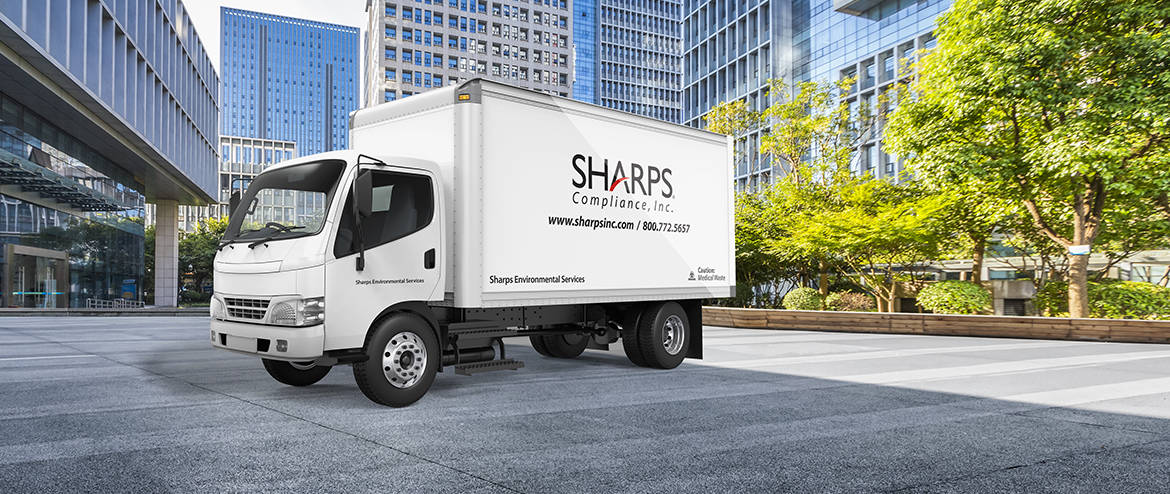
August 3, 2022 On The Road with Sharps Compliance Drivers A Sharps Compliance driver has one of the most important jobs in the company. For many of our pickup customers, the driver is the face of the company and main point of contact. Every driver gets questions about safety, waste treatment, training, and more. Recently, we spoke with two Sharps Compliance drivers, Albert Willis and Josh Goble, about their daily experiences and the relationships they build with customers. What do Albert and Josh wish every pickup customer knew about medical waste disposal, safety, and their jobs? This is your chance to find out. Safety Doesn’t Stop with You Albert and Josh aren’t just drivers; sometimes, they’re also educators. Albert:“I help customers understand that safety protects everyone involved. Safety starts when you place the waste in a secure container, but it doesn’t stop there. It goes all the way from collecting the waste to packaging it, shipping it, to autoclave and shredding. I try to help customers understand how important every step is. Especially now, a lot of places have high turnover or they’re hiring new staff. I’ll step in when I can to remind the customer about the importance of training and act as a resource.” Josh: “We have a lot of materials and brochures to help customers, but that doesn’t necessarily mean that everyone at the facility understands the difference between types of waste and how to package it. For example, one customer called for a sharps pickup, and the entire 28-gallon shipping box was filled to the top with loose, used sharps. The person packaging the waste didn’t realize that the sharps go into collection containers and the filled containers go into the shipping box. There was just a 5mm bag and cardboard box separating us from hundreds of used sharps!” Medical waste generators have cradle-to-grave responsibility for the wastes generated at their facilities. The regulations are designed to protect patients, staff, waste haulers, treatment facility workers, the public, and the environment. It’s essential for staff to receive training on how to properly package regulated medical and sharps waste so that it can be transported and treated safely. Your Time Is Valuable, So We Take Our Schedules Seriously A typical driver’s day may include dozens of stops and last 12 hours. Scheduled pickup times help our drivers plan and provide better customer service. We understand that your staffers are busy juggling multiple tasks – and all of them are important! Even minor delays can disrupt everyone’s schedule, so our drivers urge customers to have the waste packaged, labeled, and ready for pickup. Josh:“I sometimes have up to 22 stops a day, so I try to stay on schedule. Some things we can’t control, like weather or traffic tie-ups, but sometimes I’m delayed because a previous customer didn’t have the pickup ready to go. We’re always prepared to help our customers, and we need them to be ready and help us keep our day moving. Pandemic precautions greatly increased the size of some pickups. Instead of one box, we might get 20 boxes because of the COVID spike in testing.” Albert: “Before COVID, keeping to the schedule was easy-peasy – just walk in, say hello, pick up the boxes, and I was gone. But now, so much has changed. In many places, we need to arrive at a designated time so we can fill out health forms, answer questions, get our temperature taken…all that before we can even gain access to service the account. What used to be a 10-minute stop can take three times as long, and soon an 8-hour day turns into a 14-hour day.” Generators Must Package Their Own Wastes Although our drivers want to help customers as much as possible, there are regulatory limitations. They are there to pick up packaged wastes; it’s literally all the laws allow them to do. Sharps offers customers posters with step-by-step instructions for packaging their medical waste transport box or container. Josh: “Some customers don’t understand they have to package all waste. The wording on the shipping manifest says that the generator takes responsibility for the proper packaging and labeling of wastes. We can’t do that for them.” Albert: “I want to help customers as much as I can, but there are things I’m just not allowed to do. I can’t help you package waste, but I can walk you through your facility and show you what you need to do. I can’t touch your waste, only move the boxes. I don’t have the PPE needed to handle waste directly. Imagine if I were to try it at a pediatric facility and pick up a virus. I could spread that to the next stop at a dentist’s office, at an assisted living facility, you get the idea. The customer boxes up the waste. I wear gloves when I handle the boxes and wash my hands after removing the gloves. It helps protect me, the next customer, warehouse drivers, and everyone down the line.” We Take More Than Sharps Albert: “Sharps is in our name, but it’s not the only thing we do. With some newer customers, I’ll go inside for the pickup, but the person says they don’t have anything. Then I get called back for another pickup and find out that they did have some used gauze and biohazardous stuff. When I asked one customer why they didn’t give it to me before, they said that, since I said I was with ‘Sharps Compliance,’ they thought I only took sharps.” Sharps Compliance is a full-service medical, pharmaceutical, and hazardous waste disposal company. Yes, we do take more than just sharps – a lot more! In some markets, we can even help customers with their secure document shredding and disposal needs. We’re Proud of The Work We Do for Sharps Compliance Although we didn’t ask our drivers to give us a shout-out, it was great to hear that they’re proud of their work and the opportunities they have within the company. Josh: “I love not being in an office all day and being able to travel and see different towns, but I like working for Sharps in particular because I know that I’m contributing to a good cause. I’m helping protect the public and the environment. What I do every day is helping society.” Albert:“You wouldn’t believe the support I get from upper management. I’ve worked at some places where I was continually questioned and micromanaged. But management here trusts that I’m making the right decisions. I’m not just a number here. I’ve played sports all my life, and I like being part of a team – and that’s what we are here at Sharps.” There Really Is a Sharps Compliance Advantage Both drivers noted how surprised some new customers were when they saw the level of service they get from Sharps Compliance compared to “some of the other guys out there.” Would you like to learn more about the Sharps Compliance Advantage? Contact us online or call 800.772.5657 to learn more about our environmentally sustainable, regulatory-compliant solutions for your medical waste disposal needs. We can help you create a custom waste disposal solution that meets your facility’s individual needs and your budget. Read More
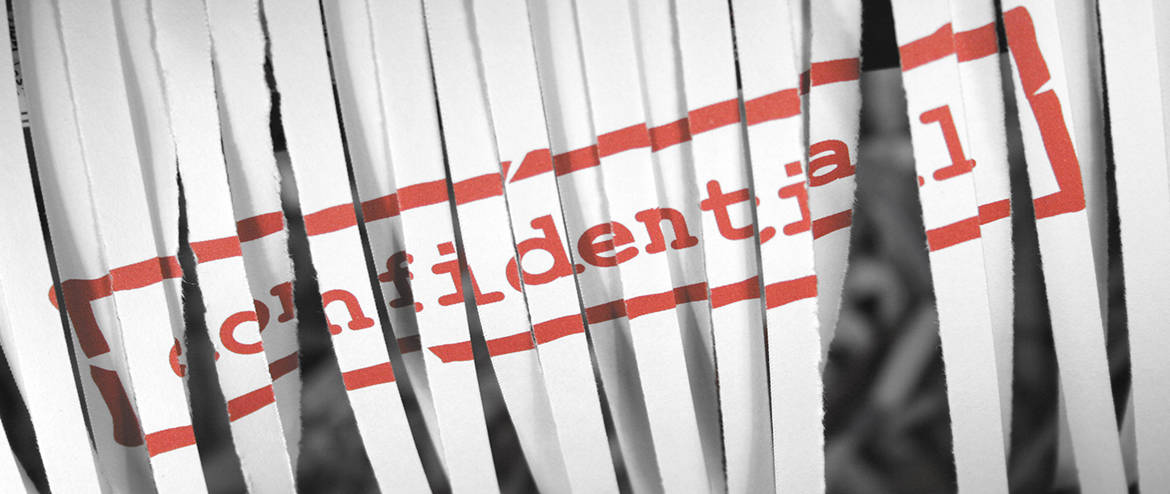
July 22, 2022 Protect Patient Privacy with a HIPAA-Compliant Shredding Service Patient privacy and confidentiality are huge issues in healthcare. Cybercrime is a growing concern, particularly as more providers adopt electronic health records. For example, there were twice as many reported data breaches during the first five months of 2022 than in the same period in 2021. Although cybercrime gets a lot of attention, patient privacy is often compromised the old-fashioned way by improper disposal of paper documents containing patients’ protected health information (PHI). Any documents that have PHI should be stored securely before shredding/destruction and never mixed in with regular trash or recycling. Sharps Compliance offers secure, HIPAA-compliant document shredding and destruction services in select markets to help ensure providers comply with HIPAA regulations and protect patients’ health data and privacy. HIPAA Regulations and Healthcare Providers In 1996, Congress passed HIPAA, the Health Insurance Portability and Accountability Act, and the rules went into effect in 2003. The law was designed to “improve the efficiency and effectiveness of the health care system” and enact “federal privacy protections for individually identifiable health information.” The HIPAA Privacy Rule “requires appropriate safeguards to protect the privacy of protected health information and sets limits and conditions on the uses and disclosures that may be made of such information without an ‘individual’s authorization.” All healthcare providers and clearinghouses, health plans, and other covered entities must dispose of patients’ health information in a HIPAA-compliant manner. HHS suggested disposal/destruction methods include: For PHI in paper records, shredding, burning, pulping, or pulverizing the records so that PHI is rendered essentially unreadable, indecipherable, and otherwise cannot be reconstructed. Maintaining labeled prescription bottles and other PHI in opaque bags in a secure area and using a disposal vendor, who is considered a business associate and held to the same confidentiality standards, to pick up and shred or otherwise destroy the PHI in a way meeting the required standard. HIPAA Violations Can Be Costly HIPAA-compliant document management and disposal protect your patients’ privacy and your organization’s financial bottom line. Failure to comply with HIPAA can result in both civil and criminal penalties. The fines escalate quickly for repeat violators. Fines can range from $100-$50,000 (per record) based on the level of negligence. The maximum penalty is $1.5 million annually for violations of identical provision. Violations can also result in jail time if the entity has been cited but did nothing to correct the issues (willful neglect). Fines increase with the number of patients and amount of neglect. In addition to the regulatory costs, bad publicity for the hospital or practice may erode patient trust and confidence. For example, in 2019, New York City reporters found boxes containing hundreds of medical files piled on the street outside an office building. The files included “patient names, social security numbers and sensitive medical diagnoses.” The medical practice responsible said the documents were “waiting to be picked up by the shredding company” and that the records had been “thrown out inadvertently.” In 2018, HHS fined a medical records maintenance, storage, and delivery services provider $100,000 after an anonymous tip led investigators to a parking lot where they found over 2,000 medical records in an unsecured company truck. Know the Rules and Train Your Employees An HHS fact sheet is clear about the generator’s responsibility to provide proper employee training: “Covered entities must ensure that their workforce members receive training on and follow the disposal policies and procedures of the covered entity, as necessary and appropriate for each workforce member.” Many organizations have specific disposal containers for different waste streams: Secure containers for sharps and regulated medical wastes Pharmaceutical waste collection containers Cans for regular trash Recycling bins Secure containers for sensitive documentation that require shredding However, employees must understand the system and use it properly. In a 2018 study published in the Journal of the American Medical Association, researchers found that “documents containing medium- and high-sensitivity items were being disposed of in the recycling” at hospitals and other medical care facilities. Employees naturally want to recycle as much as possible but may not consider the privacy and regulatory consequences of mixing PHI documents with regular recycling. Proper employee training is a must! Sharps customers have access to our ComplianceTrac online training and audit platform. It’s available 24/7 and offers convenient, accessible HIPAA training tools. Your staff can access required training on their schedule. Stay Compliant with Sharps Compliance Shredding Services At Sharps Compliance, we offer everything your facility needs to securely collect and store documents with PHI at your facility before pickup and disposal. Our document shredding service includes: Secure containers provided for the collection of materials We accept all paper products containing PHI Pickup available at scheduled frequencies Flat-fee pricing per cabinet – no hidden fees or surcharges Documents destroyed at an NAID-approved facility Document tracking and Certificate of Destruction that should be retained in case of a HIPAA audit or other legal need We offer this HIPAA-compliant waste management service in selected markets. Contact us at 800.772.5657 for more information about our shredding and secure document destruction services. Read More
July 6, 2022 Regulated Medical Waste Disposal in Urgent Care Centers Urgent care clinics bridge the gap between emergency departments (ED) and primary care providers. They’re an alternative for patients who need immediate medical care for conditions that aren’t life-threatening. Patients may present with symptoms as diverse as sore throats, minor cuts and puncture wounds, broken bones, or serious conditions that require emergency transport to an ED. Depending on their services, urgent care centers may generate regulated medical and pharmaceutical wastes. Sharps Compliance is a trusted partner to many urgent care providers nationwide. We provide a variety of medical waste mailback and pickup services customized to each clinic’s needs. What Is Urgent Care? Urgent care clinics carry a variety of names: Acute care clinics Minor emergency centers Quick care clinics Urgent care clinics are changing the healthcare landscape in the US, according to Insider Intelligence. Consumer expectations for healthcare access are changing, and urgent care centers can help fill the gaps. “Consumer demand for hyper-convenient care has reached a fever pitch, especially among younger cohorts. Nearly one-quarter of Millenials haven’t visited a primary care physician (PCP) in five years or more, with about one-third saying that going to get a physical isn’t convenient, per a 2019 Harmony Healthcare IT survey. That’s why we’re seeing more younger patients opt for medical care as well as walk-in appointments for real-time needs such as covid testing.” They provide walk-in treatment of acute injuries and illnesses that aren’t life-threatening but still require professional medical treatment within 24 hours. Because the clinics often offer extended hours outside the regular M-F/9-5 office hours provided by many primary care providers, urgent care clinics provide more immediate patient care. They can be more cost-effective, convenient alternatives to emergency room care. Urgent Care Is a Rapidly Growing Industry in the US The shortage of primary care physicians in the US is getting worse. A 2019 Association of American Medical Colleges report predicted a shortfall of between 21,100 and 55,200 primary care physicians by 2030. This shortage makes it harder for many Americans to access primary care, particularly in rural and other underserved areas. Emergency departments have long acted as the nation’s health safety net. Even before the COVID-19 pandemic, ED overcrowding was a problem at many hospitals. It can result in worse patient outcomes and higher medical costs. A 2009 study found that serious complications rose three- to five-fold in acute coronary syndrome patients who presented at EDs during times of overcrowding. Long ED wait times are associated with increases in the number of patients who leave against medical advice before treatment is complete. As the number of clinics increases (as well as the expanded services available), so does the need for affordable, regulatory-compliant medical waste disposal solutions for urgent care clinics. Sharps Compliance is here to help. Regulated Medical Waste and Urgent Care We offer mailback collection systems with everything urgent care clinics need to collect, package, and compliantly ship the waste for treatment. Sharps Shipback Systems are ideal for safely collecting and properly treating sharps waste and other used healthcare products. The sizes range from 1-quart to 20 and 30-gallon Covidien sharps shipback containers` with wall enclosures help urgent care centers keep counter space clear. The convenient wall mounts help prevent access to contents in high-traffic areas. We also offer route-based medical waste pickup services for urgent care clinics that generate more red bag waste, like rapid infectious disease testing materials and soiled wound dressings. We provide everything needed to package and label regulated medical wastes for transport. Our fully-permitted vehicles and treatment facilities comply with all state and federal regulations. Urgent Care Centers and Pharmaceutical Waste Disposal Many urgent care clinics may need to dispose of unused, recalled, or expired non-controlled and non-hazardous medications. Our MedSafe Basic is an affordable, easy-to-use disposal solution for the compliant treatment of unwanted and expired medications. Sharps Compliance Offers Solutions State medical waste regulations differ, and we can help urgent care centers comply with all applicable laws. Employee training: Our online training and compliance system, ComplianceTrac, helps clinics provide required employee training, maintain safety data sheets, manage OSHA documentation, and more. Custom medical waste solutions: Our sales and support teams work with each urgent care center to determine their individual needs and develop a custom waste management and disposal solution. Call us at 800.772.5657 to learn more about our medical waste management and disposal solutions for urgent care clinics. We’re here to help you solve problems and comply with all regulatory requirements. Read More
June 29, 2022 Can You Tell the Difference Between Hazardous and Biohazardous Waste? Hazardous and biohazardous wastes can potentially harm human, animal, and environmental health and wellbeing. These two types of wastes differ in composition, origin, dangers, and disposal methods. Waste generators need to understand the difference between biohazardous and hazardous wastes to protect the staff and the public, comply with all applicable regulations, and avoid fines and penalties. Hazardous Waste Examples Hazardous waste is any waste that contains dangerous chemicals, including heavy metals, flammable liquids, corrosive material, and other contaminants that can directly harm living creatures and the environment. Per the EPA, “hazardous waste may come in many forms, including liquids, solids, gases, and sludges.” Healthcare facilities and veterinary clinics may generate small quantities of hazardous wastes and hazardous wastes pharmaceuticals (HWP). The vast majority of hazardous waste is generated from large quantity generators in the industrial sector, including semiconductors, automobiles, and allied chemical industries. Common hazardous waste streams in healthcare include: Flammable liquid mixtures Hazardous Waste Pharmaceuticals, including warfarin/coumadin, insulin, and medical aerosols/inhalers X-ray Process Waste (fixer/developer solutions, film, and lead aprons) Some pharmaceuticals (including their containers) must be managed as hazardous waste. Visit the EPA website for more information about P-list, U-list, or characteristic wastes that must be handled according to guidelines for HWP. Note that these drugs are not the same as the hazardous drug list maintained by the CDC’s National Institute for Occupational Safety and Health (NIOSH). Learn more about the difference between hazardous drugs and hazardous waste pharmaceuticals. Households can also generate hazardous waste. Our infographic lists items you should never put in your household trash, and the accompanying article discusses safe disposal options. Biohazardous Waste Examples Biohazardous waste is medical waste that has the potential to spread disease or pathogens to humans. It’s usually generated at healthcare facilities, including hospitals, dental offices, veterinary clinics, and laboratories, but tattoo studios, medspas, and funeral homes also generate biohazardous regulated medical wastes (RMW). Biohazardous medical waste types include: Sharps waste (needles, scalpels, etc.) Pathological and anatomical waste Microbiological waste Blood, blood products, and other potentially infectious materials (OPIM) Zoonotic waste Contaminated items that would release blood or blood products or OPIM in a liquid or semi-liquid state if compressed Isolation waste Households and individuals also generate biohazardous waste – mostly used sharps. This waste can be a danger to others when improperly disposed of in recycling bins, regular trash, or in public places. Technically, there is no material difference between the terms biohazardous waste and regulated medical waste, but regulatory terminology varies by state: “For example, Arizona state regulations refer to the disposal and management of “biohazardous medical waste” instead of the more commonly used term “regulated medical waste.” In contrast, Mississippi uses the terms “infectious medical waste” and “medical waste” to differentiate between potentially infectious RMW and non-infectious medical waste.” Hazardous Waste and Biohazardous Waste Disposal Federal and state agencies strictly regulate both hazardous and biohazardous waste disposal. Hazardous waste is defined at the federal level by the Resource Conservation and Recovery Act (RCRA). The EPA maintains a list of applicable RCRA hazardous waste regulations. Federal agencies, such as the EPA, OSHA, and DOT, have regulations regarding hazardous and biohazardous medical waste handling, storage, transportation, and treatment. For example: EPA “has jurisdiction over medical waste treatment technologies, which claim to reduce the infectiousness of the waste using chemicals.” DOT “regulates the transportation of wastes it deems capable of posing an unreasonable risk to safety, health, and property when transported.” It does this through mandatory employee training as well as requirements for waste classification, packaging, and paperwork. OSHA medical waste regulations focus on workplace safety issues, such as needlestick prevention, red bag waste classification and management, and employee safety training. However, most regulation is at the state and local level. State medical waste regulations differ, and states are free to impose stricter regulations than federal requirements. Some state hazardous waste classifications are more stringent than federal requirements. Generators must be aware of their state requirements and hazardous waste generator category to ensure that they follow all storage and reporting requirements. Mistakes cost money: a non-conforming hazardous waste stream sent to a treatment facility may incur extra costs for remediation, or worse, be rejected and returned to the generator. Do You Need Help Managing Your Hazardous and Medical Wastes? Sharps Compliance can help answer your questions about your RCRA generator status and other waste disposal issues, including state and federal regulations, employee training, cradle-to-grave waste tracking, and more. We offer comprehensive solutions for managing biohazardous regulated medical waste, unused pharmaceuticals, and hazardous waste. Contact us at 800.772.5857 or request a service quote online. Read More
December 1, 2021 System Development of the Hazardous Waste e-Manifest System Hazardous waste generators get invoiced for an “EPA Electronic Manifest Program Fee.” Why? What is this fee used for? Let’s see if we can answer that for you. The EPA regulates all types of hazardous waste (HW) generated in healthcare, from spent solvent (such as alcohols and ketones) and pharmaceuticals to diagnostic testing procedure residuals. Much of the HW that these businesses generate must be shipped long distances to treatment, storage, and disposal facilities (TSDFs) where it can be properly disposed of or recycled. Hazardous waste must be tracked throughout its entire life cycle (cradle-to-grave) so that the EPA and other regulatory authorities can determine its origin and destination and know it was properly managed. Following waste from start to finish reduces the risk of fines from improper dumping and harmful environmental consequences. What Is the EPA e-Manifest? On June 30, 2018, the EPA launched a national system for tracking hazardous waste shipments electronically. This system, known as the “e-Manifest system,” modernizes the nation’s cradle-to-grave hazardous waste tracking process while saving valuable time, resources, and dollars for industry and states. The EPA established e-Manifest per the Hazardous Waste Electronic Manifest Establishment Act, which Congress enacted into law on October 5, 2012. e-Manifest is a multi-faceted program that includes the following: System development Regulation and policy Implementation and communication Consultation with the e-Manifest federal advisory committee The e-Manifest system offers generators, transporters, and receiving facilities a digital one-stop shop for manifest tracking and recordkeeping to meet their regulatory requirements. Receiving facilities upload manifest copies at the end of their lifecycle, and generators can log in to view their completed manifest copies. Hazardous Waste Paper Manifests The EPA set June 30, 2021 as the deadline to ensure all TSDFs report manifest information to RCRAInfo (the program which hosts e-Manifests) electronically. Now, the EPA will no longer accept paper manifest submissions from TSDFs, but paper manifests may still be used from the HW generator location for shipments to the TSDF. Paper manifests are still used for over-the-road shipments because the larger HW service providers have not yet aligned their software tracking systems to the EPA’s digital architecture. It is all still a work in progress, funded by the e-Manifest program fees. Improving the e-Manifest System The EPA is committed to ensuring that the e-Manifest system must meet its users’ needs. To accomplish this goal, they are: Conducting user-centered design Developing and utilizing agile software development methodologies This approach enables continuous improvement through pilots and testing, using iterative processes, and regular engagement with users and stakeholders throughout the process. The EPA will continue to provide ongoing opportunities for input until a full-scale system is complete and thoroughly tested by all entities. e-Manifest Fees: Who’s Paying for This Program? The development of this program is costly to the EPA, so money is collected to defray these costs. The EPA publishes user fees by July 1 of each odd-numbered calendar year on their website. These published user fees will then cover the two fiscal years beginning on October 1 and ending on September 30 of the next odd-numbered calendar year. These fees are updated to reflect actual program costs and manifest usage. The user fee is charged to receiving waste facilities (TSDFs) for each manifest they submit to the EPA. Generators, transporters, and brokers are not directly charged. Thus, the TSDF will pass along this cost from the EPA to their customers who deliver the waste for management. If you have questions about the e-Manifest program and the fee structure, call Sharps Compliance at 800.772.5657 to learn more. Read More
November 10, 2021 Is Your PPE Regulated Medical Waste? OSHA requires employers to “provide appropriate PPE for workers who could be exposed to blood or other infectious materials (such as internal bodily fluids).” Commonly used Personal Protective Equipment (PPE) for healthcare workers include gloves, gowns, goggles, masks, and face shields. While some of those items may be reusable, the majority are single-use items requiring disposal after use. Though OSHA defines what level of contamination requires disposal as regulated medical waste, state regulations may have more strict definitions of what PPE must be disposed of as regulated medical waste (RMW). Do your employees know how to tell the difference? Proper training on waste segregation – for PPE and other medical-related wastes – can help you create a safer workplace, keep you regulatory compliant, and save on medical waste disposal costs. Many Facilities Face Rising Costs for PPE Procurement & Disposal The COVID-19 pandemic put healthcare providers in a double bind: as demand for PPE increased, so did the cost to purchase it. However, medical waste disposal costs also increased for many medical facilities due to the over-classification of COVID-related PPE as RMW. Initial uncertainty about modes of disease transmission led many to err on the side of caution and treat all PPE as RMW. Later guidance from OSHA and the CDC indicated that most COVID-related PPE could be disposed of in regular trash. “The Occupational Safety and Health Administration and the CDC released guidance specific to COVID-19 waste, which determined that the virus is a Category B infectious substance. This means PPE and other medical waste generated in the treatment of patients with COVID-19 can be managed in the same way as other waste related to Category B infectious substances, in contrast to the more hazardous Category A infectious waste generated in the management of diseases such as Ebola.” In most states, this means that only PPE that is grossly contaminated with blood or other potentially infectious materials to the extent that such substances could be released upon handling should be treated as RMW. The rest can be disposed of in regular trash. However, remember that several states and industries have more stringent guidelines for the management of PPE waste during the COVID-19 pandemic. Always check with your appropriate regulatory agencies for handling and disposal guidelines. Read our September 2021 updated guide to COVID medical waste to learn more about waste disposal requirements for healthcare settings and other industries. Strategies to Lower PPE and RMW Disposal Costs Because PPE may have been in contact with bloodborne pathogens or other potentially infectious materials (OPIM), some waste generators place all of it in red biohazard bags to be disposed of as regulated medical waste “just in case.” This is an expensive mistake! RMW disposal costs are as much as ten times higher than for municipal trash. Even small reductions in quantities can result in big savings. Make waste segregation easy: Use color to provide visual cues. For example, RMW waste goes in red containers, recycling in green, regular trash in brown, etc. Place them conveniently for staffers, but separate them so that red bag containers aren’t side-by-side with regular trash. Use posters and visual aids: Place informational posters or other visual aids above waste containers. Employees can quickly see what type of waste is permitted in each container. Sharps Compliance provides posters and training materials to all our customers to help them properly segregate wastes. Use the proper size collection containers: Small RMW containers in exam and patient rooms make it harder for patients and workers to treat them as regular trash containers. We can help you determine the most appropriate size of medical waste recovery systems for your facility. Employee training: No healthcare worker wants to make a mistake and unintentionally spread disease or injure someone. Without proper training, employees may err on the side of caution: if they’re not absolutely sure it’s safe, it goes in the red bag. That means your biohazardous medical waste containers may be full of used gloves and gowns instead of actual regulated medical waste products. Those bloated red bags can break your RMW disposal budget, but simple staff training can fix this, using resources like the complementary segregation posters provided to Sharps customers. State training requirements differ, but OSHA requires orientation training and annual refresher training for employees who have regular or occasional potential for exposure to bloodborne pathogens or OPIM. Additionally, facilities that have direct pickup of RMW must also provide DOT training. Sharps Compliance Can Help Sharps Compliance is a leading single-source provider of regulatory-compliant services for healthcare professionals. We offer comprehensive waste management services for sharps, medical waste, and pharmaceutical wastes. With our service, there are no contracts or hidden fees. Contact us to request a service quote or call 1.800.772.5657 for more information about how we can help you stay compliant and save money on disposal costs. Read More
October 13, 2021 Part 2: Federal vs. State Hazardous Waste Generator Categories In Part 1 of this series, we discussed the differences between federal and state RCRA programs. In Part 2, we will talk about the different hazardous waste (HW) generator categories and why they are important. Except for Alaska and Iowa, which operate under federal jurisdiction, each state runs an approved Resource Conservation and Recovery Act (RCRA) program for managing hazardous waste. Each state’s program must be at least as stringent as the federal RCRA regulations, but they are not required to be identical. Differences between state hazardous waste programs range from small (but important) to significant. One area where variations are quite common is RCRA generator categories. What Are the Three Categories of Hazardous Waste Generators? The federal regulations have three hazardous waste generator categories. The category assignment is based upon the quantity of hazardous waste a facility generates within a calendar month. The quantities of HW listed per generator category below are per a 30-day period. Large Quantity Generator (LQG) LQGs generate: 1,000 kg (2,200 pounds) of non-acute hazardous waste 1 kg (2.2 pounds) of acute hazardous waste 100 kg (220 pounds) of acute hazardous waste mixed with debris Notes: LQGs must have an EPA identification number. There are no accumulation limits for LQGs. Small Quantity Generator (SQGs) SQGs generate: >100 kg and < 1,000 kg of non-acute hazardous waste < 1 kg of acute hazardous waste < 100 kg of acute hazardous waste mixed with debris SQGs can accumulate on-site, at any one time: < 6,000 kg (13,200 pounds) of non-acute hazardous waste < 1 kg of acute hazardous waste < 100 kg of acute hazardous waste mixed with debris Note: SQGs must have an EPA identification number. Very Small Quantity Generator (VSQG)* VSQGs generate: < 100 kg (220 pounds) of non-acute hazardous waste < 1 kg (2.2 pounds) of acute hazardous waste < 100 kg of acute hazardous waste mixed with debris VSQGs can accumulate on-site, at any one time: < 1,000 kg (2,200 pounds) of non-acute hazardous waste < 1 kg of acute hazardous waste < 100 kg of acute hazardous waste mixed with debris *Formerly known as Conditionally Exempt Small Quantity Generators or CESQGs. More on this below. Why Your Hazardous Waste Generator Status Matters Under RCRA, not all hazardous waste generators are treated equally. Large Quantity Generators (LQGs) are subject to the most stringent standards. LQG facilities must do all the following: Provide annual hazardous waste training for personnel Accumulate waste on-site for no more than 90 days Comply with RCRA air standards Store ignitable and reactive wastes at least 50 feet from the property line Submit biennial reports Develop a comprehensive written contingency plan SQGs and VSQGs are subject to fewer and may be exempt from many hazardous waste management requirements. VSQG vs. CESQG Often called the most significant hazardous waste rulemaking in decades, the RCRA Generator Improvements Rule (GIR) made major changes to the federal hazardous waste management regulations. One of those changes was to re-name Conditionally Exempt Small Quantity Generators or CESQGs. These generators are now referred to as Very Small Quantity Generators or VSQGs. In states that have not yet adopted the GIR, VSQGs may still be referred to by their “old” name – Conditionally Exempt Small Quantity Generators. As of May 1, 2021, 34 states had adopted the GIR, even though the final rule was published on November 28, 2016. By law, individual states have up to 24 months to adopt the rule. In states that have not yet adopted the GIR, regulatory authorities are discussing their options internally, drafting rules, and collecting public input. If you have questions about managing your hazardous waste, contact us for a free consultation. Read More
September 29, 2021 Part 1: Federal vs. State Hazardous Waste Classifications Last updated on October 13, 2021 In the United States, enforcing laws and regulations involves a balancing act between the federal government and individual state governments. When it comes to hazardous waste management, states can impose standards stricter than the federal governments. As a result, certain materials not regulated as solid or hazardous waste under the federal Resource Conservation and Recovery Act (RCRA) may be regulated materials/wastes under a specific state’s program. Under RCRA, Congress and the US EPA encourage each state to implement and oversee its own hazardous waste program. With the exception of Alaska and Iowa, each US state (and several territories) maintains its own RCRA program that it operates, incorporating, at a minimum, the federal rules. For the US EPA to authorize a state’s RCRA program to operate instead of federal standards, the state program must be: Consistent with the federal RCRA standards Comprehensively at least as stringent as the RCRA An individual state’s hazardous waste program may be more stringent than the federal regulations. However, a state’s program cannot be less stringent than the federal regulations. Without getting into the minutia, different federal regulations deal with the authorization and implementation of individual state programs, e.g.: US Code: Title 42 6926: Authorized State Hazardous Waste Programs Code of Federal Regulations: Title 40: Protection of Environment §271.1 In the end, some states have a broader scope of hazardous waste rules that generators within a said state must follow. Common State Differences in Hazardous Waste Classification While the federal regulations generally provide a strong foundation for state RCRA programs, a state’s hazardous waste definition commonly varies in these (and other) ways: Additional listed wastes: Industry-specific listed waste codes are typical in states where a unique industry is prevalent Polychlorinated Biphenyl (PCB) wastes Unique military wastes in states with military installations handling sensitive materials Expanded characteristic wastes: Additional characteristics such as a “lethality” or “severe” toxicity as part of the definition of hazardous waste Added criteria to an existing characteristic code definition For example, states may broaden the federal definition of corrosivity stated in 40 CFR 222 to include more than aqueous (high water) liquids and add physically solid or non-aqueous materials. They may also do any of the following: Add constituents to the table of contaminants under the toxicity characteristic Change maximum concentration levels Create a table of non-RCRA/state-regulated contaminants (e.g., for persistent and bioaccumulative toxic substances) The mixture rule: Under the federal rules, mixing solid waste with a listed hazardous waste causes the entire mixture to be regulated as that listed hazardous waste. However, federal regulations have exceptions that exclude this mixture as a hazardous waste if the hazardous waste was only listed for ignitability, corrosivity, or reactivity and the resultant mixture no longer exhibits a characteristic. A state may not allow for this exception. Universal Wastes There are five types of hazardous wastes that are regulated less stringently as universal wastes: Batteries Pesticides Mercury-containing equipment (e.g., thermometers, thermostats, and other items containing elemental mercury) Lamps (e.g., fluorescent bulbs) Aerosols Many states have added to their lists of universal wastes to include things like paint, e-waste, CRTs, and antifreeze. In some cases, there are additional requirements for state-only universal waste (e.g., paint in Texas and CRTs in California). Know Your State Rules for Hazardous Waste Management Hazardous waste generators nationwide must comply with all applicable hazardous waste regulations — both federal and state-specific ones. Because the state program may include additional, more stringent, or different requirements, generators must be aware of the requirements in their state and how they differ from the US EPA rules. In Part 2 of this series, we will review some of the more stringent rules in specific states. If you have questions about managing your hazardous waste, contact us for a free consultation. Read More
September 15, 2021 How and Why Your RCRA Generator Status Can Change The RCRA hazardous waste management regulations require every generator to determine their generator status monthly (40 CFR 262.13). When determining your generator status, you must count all your hazardous waste at the “point of generation” unless it is specifically excluded. It’s not unusual for your generator status to change from month to month, depending on exactly what you generate. The RCRA regulations list separate generator status thresholds for Hazardous waste Acutely hazardous waste Spill cleanup materials from acutely hazardous waste Under RCRA, generator status is based on the amount of hazardous waste generated per month. Large Quantity Generators or LQGs are subject to the most stringent hazardous waste management requirements. RCRA Generator Status Amount Generated Per Month Large Quantity Generator (LQG) 1,000 kg or more; or >1 kg acute HW (2,200 pounds or more; or > 2.2 pounds acute HW) Small Quantity Generator (SQG) >100 kg but <1,000 kg (>220 pounds but <2,200 pounds) Very Small Quantity Generator (VSQG) (Formerly known as Conditionally Exempt Small Quantity Generators or CESQG) 100 kg or less (220 pounds or less) What Could Change My Generator Status? The volume of hazardous waste your site produces in a given month can vary for many reasons. You may have had an extra productive month, for example, or a change in operations may lead to increased production. A spill or accident may generate additional waste that vaults you to a higher generator status. Regardless of the reason, the EPA requires you to do a monthly count of these wastes as described under 40 CFR 262.13. It is helpful to keep a running log of your wastes as you produce them to know how much you have so that you’re not surprised by a status change at the end of the month. What if I Go Up a Generator Status? Let’s start by looking at the first month in which you would be required to change your status. To keep things simple, we will assume your wastes are not somehow excluded from counting (e.g., by the new episodic generation exclusion introduced in the Generator Improvements Rule – more on this below). Example: If you generated 600 kg of hazardous waste in June, you would be a small quantity generator (SQG) of hazardous waste. If you exceed the LQG threshold of 1,000 kg per month or the 1 kg threshold for acute hazardous waste in July, all of July’s waste would have to be managed under the requirements for LQGs at 40 CFR 262.17. The requirements for LQGs include, among other things, RCRA training for personnel and a 90-day time limit on storage on-site. Again, the LQG requirements would apply to all the waste you generated in the month, not just the amount that’s “over” the threshold. Once you have been required to change your status, it is possible to lower your generator status if it were not a permanent operational change. If you reduce your waste production sufficiently, you could manage the waste in the subsequent months under the reduced regulation. However, some states may require you to prove that you have changed generator status. If you would be an LQG for multiple non-consecutive months, they likely will not allow you to change your status continually. Do I Have to Formally Change My Generator Status? According to the EPA, Form 8700-12 is the form that you use to notify the EPA and your state’s environmental regulatory agency of your hazardous waste activities through which you are given an EPA Identification Number for your site that you must resubmit for a change in generator status The form’s instructions clearly state: “You must use this form to submit a subsequent notification if your site already has an EPA Identification Number and you wish to change information (e.g., generator status, new site, contact person, new owner, new mailing address, new regulated waste activity, etc.).” While this is not a regulatory requirement, per se, based on these directions, you would use Form 8700-12 to update your status whether you went up (e.g., from SQG to LGQ) or down a status (e.g., from LQG to SQG). Some states use a state-specific form in place of EPA’s Form 8700-12, as well as their own deadlines for submitting or revising their form. Check with your state to determine if there are state-specific requirements. Relief for Episodic Events In its Generator Improvements Rule, the US EPA added a provision to provide relief for “episodic events” that would otherwise impact a facility’s generator status. EPA defines “episodic event” as “an activity that does not normally occur during generator operations and results in the generation of hazardous wastes that exceeds the calendar month quantity limits for the generator’s usual category” (40 CFR 262.231). Episodic events may be planned or unplanned. Examples of planned episodic events include lab or tank cleanouts, short-term maintenance projects, and the removal of excess inventory. Examples of unplanned episodic events include a spill, damaged equipment, or a product recall. While every state is required to adopt the Generator Improvements Rule, at least in part, not every state has done so. States must maintain a hazardous waste program that is at least as stringent as the Federal RCRA regulations. Because the new relief for episodic events makes the regulations less stringent, states can choose to adopt the relief or not. Check to see if your state provides some relief for episodic events. In states that have adopted the new relief, a VSQG or SQG can experience an episodic event without resubmitting Form 8700-12. There are, however, notification requirements that go along with claiming this relief. Once again, you will want to check your state regulations to see what reliefs are available and how best to submit the required information. Permanent Changes to Generator Status For permanent status changes, the Form 8700-12 would have to be revised. If your site is a VSQG subject to the RCRA rules in 40 CFR 262.14, you may have to use Form 8700-12 to obtain an EPA ID number if you do not already have one. Without obtaining an EPA ID number, you would not be able to properly ship your wastes for treatment, among other issues. Sharps Compliance can help answer questions about your RCRA Generator Status and hazardous waste. We offer comprehensive solutions for the management of regulated medical waste, hazardous waste, and unused medication. Read More
September 1, 2021 Drug Decomposition/Deactivation Products: Compliance, Safety, & Cost Issues Although several drug deactivation products are marketed for pharmaceutical waste disposal in home and clinical settings, none have been reviewed or approved by the Drug Enforcement Agency (DEA) or Environmental Protection Agency (EPA). Disposing of drugs in the trash (even after treatment with a drug decomposition product) may violate state and/or local regulations. Federal guidelines from the DEA, EPA, and FDA for consumer disposal of household medicines recommend take-back programs as the best disposal option. Unlike ultimate users, regulated generators of pharmaceutical waste – including hospitals, veterinarians, and long-term care facilities, to name a few – must comply with strict regulatory requirements for collecting, transporting, tracking, and treating regulated medical wastes, pharmaceutical wastes, and hazardous wastes. Regulatory Compliance Issues with Drug Decomposition Products Regulated medical, pharmaceutical, and hazardous waste disposal regulations are complex and detailed, but facilities that use drug deactivation products for medication disposal face additional training and compliance difficulties. Many states impose restrictions on methods of drug disposal. For example – Colorado prohibits the trash disposal of activated carbon-based decomposition products, and California requires the incineration of all Rx wastes (including used charcoal-based products). Other concerns include: State prohibitions on trash disposal: Although the main selling point for drug decomposition products is the ease of trash disposal, businesses’ use of such products results in a regulated business waste. This waste would be prohibited from trash disposal in most states unless extensive waste characterizations are performed to prove the mixtures are not hazardous. DEA irretrievable standard: Most drug decomposition products rely on activated carbon or charcoal to deactivate the medications. Users must follow the directions exactly for the processes to work correctly. In addition, many such products include a disclaimer that they are incapable of entirely dissolving capsule shells and patches. The DEA’s non-retrievable standard requires destruction methods to render all controlled substances non-retrievable, even mixtures where any controlled substance is likely to be present. Product limitations: Generators using these products must perform waste characterization on each bottle/batch and exercise care when combining different medications for treatment. If any individual medicine added to the disposal product has a federal hazardous waste designation, then all the resulting product-drug mixture must be managed as hazardous waste, according to the EPA’s Final Rule. Mixing of medications for treatment can raise disposal costs and/or incur regulatory penalties. Safety and shipping issues: Businesses generating both hazardous and non-hazardous pharmaceutical waste would need to implement separate disposal solutions for hazardous waste pharmaceuticals and multiple other drug categories prohibited by the product itself. For instance: Bio-based drugs, which can lead to mold growth in the bottle “Gas-causing” items or antacids, which can result in off-gassing All drug decomposition/deactivation products require the user to mix medications with a chemical solution. This raises the possibility of accidental exposure in case of spills or overfilling. Additionally, the following restrictions also apply: Bottles must be kept in controlled and secure locations and cannot necessarily be distributed throughout a facility for convenient access. Most products should be used within one year – or sooner if additives are bio-based. Mailback systems require the use of liquid hardeners to make them compliant for shipping by common carrier. However, some medications may not be compatible with the hardener. Some mailback systems are labeled using the expired DOT classification of ORM-D, as well issues with hardeners could lead to fines from UPS or DOT if spills result. Costs Associated with Drug Decomposition/Deactivation Products Waste generators can face high costs from using these products. Waste segregation: Salaried staff must spend time identifying and segregating wastes to determine what can and can’t be mixed with decomposition products. Training: The FDA approved seven new drugs in July 2021 and 12 in June 2021. Generators who use drug decomposition/deactivation products must ensure that staffers responsible for using the products receive updated information and training whenever any new drugs are used in the facility. Labor: Many medications are stored in blister packs as both a safety precaution and medication compliance aid. Many children can easily open a “child-proof” cap, but even many adults have difficulty removing a pill from a blister package. Consider how much time it will take for staff to empty vials, remove pills from packaging, and mix the medications with the product’s chemicals. A 2019 survey conducted by Sharps Compliance among a large U.S.-based long-term care (LTC) provider found that nurses spent an average of 12 hours a month removing pills from their containers for disposal. Implementing drug disposal programs utilizing collection receptacles or mailback packages allows staffers to spend more time on patient care. These programs potentially save up to $10,000 annually for the time it takes two RNs to prepare medications for disposal via a multi-step process compared to placing wastes in a collection receptacle. Regulatory Compliant Alternatives to Deactivation Products Consolidation of medication disposal options – both hazardous and non-hazardous pharmaceuticals – into a single solution can help waste generators control costs and more easily comply with federal, state, and local regulations. Our DEA-compliant MedSafe collection kiosk streamlines the disposal of unwanted, unused, and expired medications. It’s a full-service medication collection and disposal solution that meets the DEA Controlled Substances Act requirements. Comingled collection of controlled and non-controlled pharmaceuticals Inner liners returned prepaid via common carrier Online shipment tracking Proof of destruction using incineration to meet the DEA’s non-retrievable standard for controlled drugs MedSafe medication collection kiosks help generators control costs. Reduce the time required for waste segregation and training Spend less time preparing medications for disposal No additional costs or extra fees for compliant handling and treatment of hazardous waste pharmaceuticals Many LTC communities have found that MedSafe is a better alternative to decomposition products. Use of the collection kiosks offers savings of up to $12,000 a year per community and easier regulatory compliance. Contact us to learn more about how Sharps Compliance can help your facility manage your regulated medical, pharmaceutical, and hazardous waste compliance and training. There are never any hidden fees, and we work with you to develop a custom regulated waste disposal solution that meets your needs and budget. Read More