September 23, 2026 Meet Joseph Papillion: Samsara Safety Consistency Champion 2026 Sharps route technician Joseph Papillion was recognized as a 2026 Samsara Driver Cup Safety Consistency Champion, an achievement built on a simple approach: stay focused and get home safely. Safety is easy to talk about. Practicing it consistently, mile after mile and year after year, is what makes the difference. For Sharps Medical Waste Services route technician Joseph Papillion, that consistency recently earned national recognition. Joseph was named a 2026 Samsara Driver Cup Safety Consistency Champion, an award recognizing top professional drivers nationwide. The recognition came as a surprise. Joseph initially thought he was receiving something similar to an employee-of-the-month award. Once he understood what the certificate represented, his reaction changed quickly. It was real surprising, real shocking… It was exciting. Joseph has spent approximately five years working at the facility where he is now a route technician. Before moving into his current role, he worked as a material handler, giving him experience with different parts of the operation. Safety Starts With Staying Focused When asked what has contributed most to his safety record, Joseph did not describe an elaborate system. His answer was much simpler: get enough sleep, stay focused and avoid distractions. That discipline matters in a role where safety extends well beyond the driver. Sharps route technicians travel into the communities we serve every day, supporting healthcare facilities and other regulated waste generators while safely moving materials through the waste management process. The decisions made behind the wheel affect employees, customers and everyone sharing the road. For Joseph, there is also a very personal reason to take that responsibility seriously. He has a family waiting for him at home. When asked what keeps him motivated to remain safe year after year, that was ultimately where his answer led: doing the job and returning home safely at the end of the day. A Simple Lesson for the Next Driver As Sharps continues to grow and new route technicians join the company, Joseph’s advice to them is straightforward: Stay focused and don’t let anything distract you on the road. Even when other drivers create frustrating situations, Joseph says he keeps his attention where it belongs. I really don’t take my eyes off the road. It is uncomplicated advice, but that is precisely what makes it useful. Safe driving is built through decisions repeated every day, even when nobody is watching. Safety First, Every Day Safety First is one of Sharps Medical Waste Services’ core values. Joseph’s recognition is an example of what that value looks like when it becomes part of someone’s everyday work. The award recognizes one driver, but the standard behind it matters across the organization: remain attentive, protect the people around you and make the decisions that allow everyone to return home safely. Congratulations to Joseph on an achievement worth recognizing. Watch the conversation with Joseph below to hear him discuss the recognition, his approach to safe driving and the advice he has for other Sharps drivers. Read More
August 3, 2026 Loose Sharps Warning Loose Sharps Create Serious Safety Risks Improperly discarded sharps can put healthcare workers, patients, waste handlers, and members of the community at risk. Even capped needles should never be placed in regular trash or recycling. Download this visual guide for a clear reminder of safe sharps disposal practices, including: Placing sharps in a proper sharps container immediately after use Never disposing of needles or other sharps in trash or recycling Replacing sharps containers when they reach three-quarters full Following applicable local disposal guidelines Using containers that are leak-resistant and structurally sound The guide is designed to be printed, shared with employees, or posted near areas where sharps are used and discarded. Download the Proper Sharps Disposal Guide Read More
June 5, 2026 The True Value of Reliable Waste Care: How Compliant Medical Waste Management Protects Our Planet World Environment Day invites every industry to consider how its daily operations shape the world around us. This year’s theme, “Inspired by Nature. For Climate. For Our Future,” challenges organizations to look beyond broad sustainability commitments and focus on the systems that quietly influence environmental outcomes every day. For healthcare, one of those systems is medical waste management. Every year, hospitals, physician practices, laboratories, pharmacies, dental offices, and long-term care facilities generate billions of pounds of healthcare-related waste. Much of it is routine. Some of it is highly regulated. All of it requires thoughtful handling, transportation, treatment, and disposal. When those systems function properly, they are largely invisible. When they fail, the consequences can be significant. The “Syringe Tide” In the late 1980s, beaches along the Atlantic coast (particularly New Jersey and New York) became the center of a national environmental crisis when syringes, medical debris, and other healthcare materials washed ashore. The incident disrupted local economies, costing the tourism industry billions, raised public health concerns, and ultimately contributed to the passage of the Medical Waste Tracking Act of 1988. The event served as a reminder that decisions made inside healthcare facilities can have consequences far beyond their walls. Environmental concerns are not limited to visible waste. Improper disposal of pharmaceuticals and other regulated materials can introduce compounds into soil and waterways where they may affect ecosystems and wildlife. While wastewater treatment and environmental controls have improved significantly over time, responsible segregation and disposal remain critical safeguards against unnecessary environmental exposure. The EPA Regulatory Crackdown of the 1990s The environmental conversation also extends to treatment methods themselves. For decades, thousands of small on-site medical waste incinerators operated throughout the United States. Many lacked the technology needed to effectively control emissions, contributing to concerns surrounding air quality and public health. Recognizing this massive threat to air quality and public health, the EPA instituted strict Clean Air Act regulations in 1997. These regulatory changes accelerated the transition toward more advanced treatment technologies and significantly improved environmental performance across the industry. Today, healthcare organizations have access to a wider range of waste treatment options, including autoclaving, pyrolysis, ozonation, thermal technologies, electrolysis, and other specialized processes. Many providers also use Waste-to-Energy (WTE) facilities and other sustainability-focused solutions to recover value from materials while reducing reliance on traditional disposal methods. The COVID-19 Plastic & Medical Waste Surge The challenges became particularly visible again during the COVID-19 pandemic. Global healthcare systems experienced an unprecedented surge in the use of personal protective equipment, testing materials, and sharps generation. In many regions, waste infrastructure was pushed to its limits. Improper segregation increased the risk of needlestick injuries among waste workers, exposing them to bloodborne pathogens like Hepatitis B, Hepatitis C, and HIV. Additional strain was placed on municipal waste systems that were never engineered to safely contain infectious biohazards. These events illustrate an important reality: environmental stewardship in healthcare begins long before treatment or disposal. It starts with segregation. These events illustrate an important reality: environmental stewardship in healthcare begins long before treatment or disposal. It starts with segregation. Every correctly placed sharps container, every properly managed pharmaceutical, and every staff member trained to identify the appropriate waste stream contribute to a safer outcome for people and the environment alike. This is one reason programs such as reusable sharps container systems, medication take-back initiatives, and mailback solutions continue to play an increasingly important role in healthcare sustainability efforts. By helping ensure materials are directed into the appropriate treatment pathways, these programs support both regulatory compliance and environmental responsibility. Environmental Stewardship in Practice At Sharps Medical Waste Services, we believe environmental stewardship and healthcare operations should work together. For more than 30 years, we have helped organizations safely manage sharps, regulated medical waste, pharmaceutical waste, pathological waste, and other specialized healthcare-generated materials through compliant, cost-effective solutions designed around the realities of patient care. The most meaningful environmental successes rarely make headlines. They happen when the right materials reach the right treatment pathway, to safe, sustainable disposal, every time. This World Environment Day, finding the right medical waste partner may be one of the most important sustainability commitments a healthcare organization can make. — About Sharps Medical Waste Services Sharps Medical Waste Services (MWS) is a leading, U.S.-based partner for regulated medical waste management and compliance solutions, helping healthcare organizations safely manage, transport, treat, and dispose of regulated medical waste in compliance with federal, state, and local regulations. Through a commitment to safety, operational excellence, and customer partnership, Sharps MWS helps protect healthcare workers, patients, communities, and the environment while supporting the essential work of healthcare providers nationwide. For more information, please visit sharpsmws.com. Media Inquiries (281) 901-7619 [email protected] Read More
March 21, 2026 When Home Becomes the Hospital: The Safety Risks of At-Home Medical Care National Poison Prevention Week is a reminder that some of the most serious health hazards are in our living rooms, medicine cabinets, and kitchen cabinets. Maria didn’t think twice about it. Her father was managing diabetes at home, injecting insulin twice a day, just like the doctor ordered. When she helped him clear his nightstand one afternoon, she found a plastic water bottle stuffed with used needles. He’d been filling it for months. “It seemed safer than the trash,” he told her. It wasn’t. Stories like this play out in millions of homes across the country, quietly, without fanfare, and often without consequence. National Poison Prevention Week exists precisely for moments like this one: to shine a light on the risks hiding in plain sight, inside the spaces where we feel safest. The Living Room Is the New Clinic This shift is happening fast. The U.S. home healthcare services market was valued at over $100 billion in 2024 (Fortune Business Insights), and it continues to grow. Home health volumes are expected to increase by 22% by 2034 (Respiratory Therapy), driven by an aging population and a healthcare system that is actively pushing care out of hospitals. The home infusion therapy market alone now serves 3.2 million patients annually, with 60% preferring to receive treatment at home. (Business Wire) That’s millions of people managing complex medical needs; insulin injections, IV infusions, chemotherapy, in spaces designed for living, not for clinical care. The comfort is accommodating. But the risks that come with it are too real to ignore. The Needle in the Trash Bag Sharps: needles, lancets, syringes, auto-injectors, are now everyday items in many households. And every one of them, after a single use, becomes a potential hazard. The CDC estimates that 385,000 needlestick and sharps-related injuries occur among hospital-based healthcare personnel every year (Minnesota Department of Health). In hospitals, there are protocols, trained staff, and regulated disposal systems. At home, there’s often none of that. What there is, instead, is improvisation. Coffee cans. Laundry detergent jugs. The plastic bottle in Maria’s father’s room. These containers seem sturdy until a needle punctures the side, or a lid pops off in a trash bag, and suddenly, a sanitation worker or a curious child is facing a contaminated injury with no warning and no context. Transmission of at least 20 different pathogens, including hepatitis B, hepatitis C, and HIV, by needlestick and sharps injuries has been documented (PubMed Central). The injury doesn’t have to happen to the patient. It can happen to anyone who touches what the patient discarded. Proper sharps containers are engineered specifically to prevent this. They’re puncture-resistant, sealed, and clearly labeled, designed for one job: making sure a used needle is the last thing that hurts anyone. The Cleaning Product in the Wrong Bottle Sharps are one piece of the puzzle. The other sits beneath kitchen sinks and inside garages across the country. Household chemicals cause serious harm every year. Primarily because of obvious misuse, but also because of a surprisingly common shortcut: transferring them into unlabeled containers. A cleaning solution poured into an old soda bottle. A pesticide left in an unmarked cup on the counter. To the person who did it, the context is obvious. To a child reaching for a drink, or an elderly parent whose memory is fading, it isn’t. This is exactly the kind of preventable tragedy National Poison Prevention Week was created to address. The rule sounds simple, but it saves lives: keep all chemicals in their original, labeled containers — always. No exceptions for convenience. The Medicine Cabinet Is More Dangerous Than You Think When most people picture a poisoning risk, they imagine something industrial or something clearly dangerous. The reality is far more ordinary. In 2024, 55 U.S. poison centers handled nearly 2.1 million human poison exposures, roughly one every 15 seconds. Cleaning substances and pain medications top the list of the most common exposures in children (Poison). On average, approximately three children and adolescents ages 0–19 die from poisoning every single day in the United States (Children’s Safety Network). Most of these exposures happen at home, with medications or substances that families assumed were safe simply because they were familiar. For patients receiving complex treatments at home, the stakes are even higher. When a patient receives chemotherapy, traces of the drug remain present in bodily fluids for 48 to 72 hours after treatment. Acute exposure for caregivers can cause rash, nausea, vomiting, dizziness, and abdominal pain. Longer-term exposure has been associated with congenital disabilities and reproductive harm. Research has found contamination from chemotherapy drugs on toilet, bathroom, and kitchen surfaces inside patients’ homes and has documented measurable exposure risks for family members living in those spaces (ScienceDirect). The treatment designed to heal one person can quietly endanger everyone who shares their home. Turning Awareness into Action This is the heart of what National Poison Prevention Week asks of all of us, awareness and action. Most of these hazards are preventable, and prevention doesn’t require a medical degree. It requires the right habits and the right tools. Use certified sharps containers: never household trash, recycling bins, or improvised alternatives. When full, dispose of them through a compliant mail-back or collection program. Keep chemicals and medications in their original containers: labeled, sealed, and stored out of reach of children and anyone who might mistake them for something safe. Follow dosage instructions precisely: even for medications that feel routine. Over-the-counter drugs can cause serious harm when misused or combined with other medications. Handle chemotherapy waste carefully: wear gloves when managing bodily fluids or soiled laundry for 48–72 hours post-treatment, and use a purpose-built trace-chemo disposal system. Talk to your care team: patients receiving home treatment should ask about disposal protocols before leaving the clinic. Providers should make this a standard part of every discharge conversation. Safety Extends Beyond the Point of Treatment National Poison Prevention Week comes once a year. But the risks it highlights exist every day, in the sharps container that never got ordered, the cleaning product stored in the wrong bottle, the medication left where a grandchild can reach it. Sharps Medical Waste Services supports the safety of home-based care. Our solutions are built for real home environments, practical, compliant, and designed to make responsible disposal as easy as possible: Sharps Mailback System: compliant sharps disposal from home, no special trip required TakeAway Medication Recovery System Envelopes: safe, responsible medication disposal for residential use Pickup System for Trace Chemo: purpose-built disposal for chemotherapy-related waste, protecting families and caregivers from hidden exposure The home should be a place of healing. Keeping it that way takes good intentions, the right knowledge, habits, and the right tools. Explore our home disposal solutions and make safety part of your care routine. — About Sharps Medical Waste Services Sharps Medical Waste Services (MWS) is a leading, U.S.-based provider of regulated medical waste management and compliance solutions, serving healthcare facilities, pharmacies, laboratories, and businesses nationwide. The company is committed to protecting public health through safe, compliant, and reliable waste handling services, supported by rigorous regulatory standards, operational excellence, and a customer-focused service model. For more information, please visit www.sharpsmws.com. Media Inquiries (281) 901-7619 [email protected] Read More
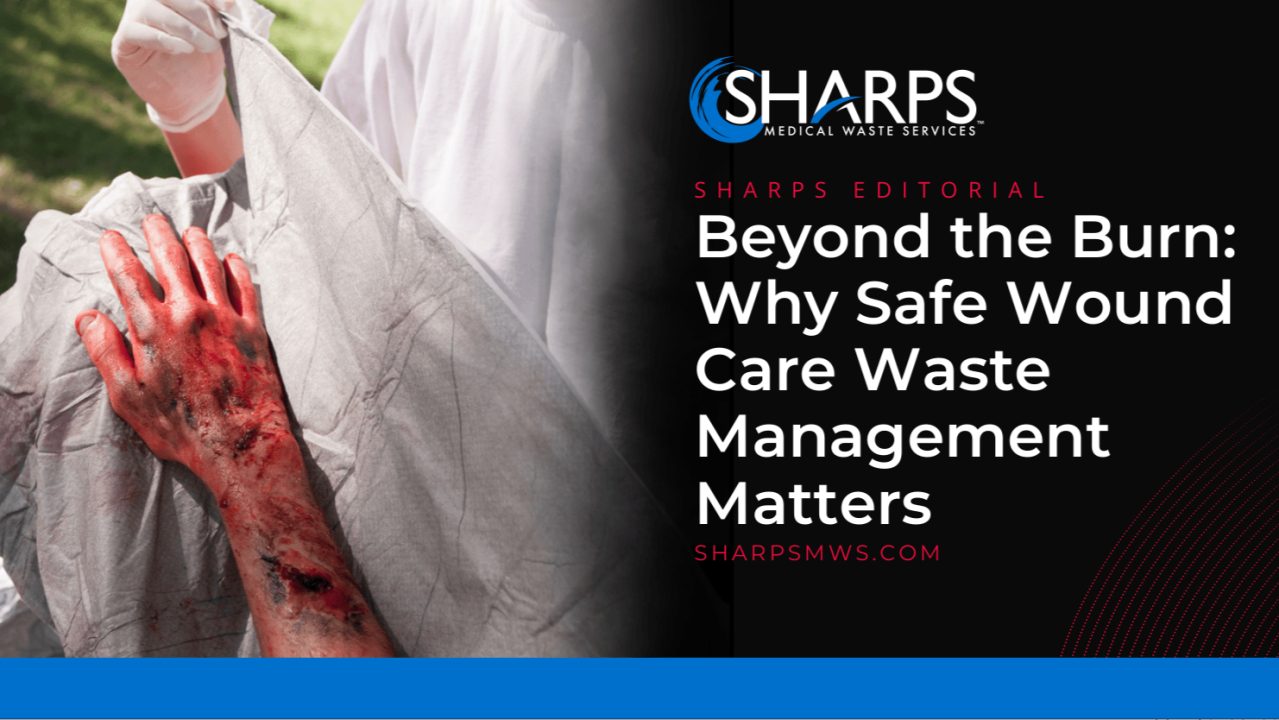
February 11, 2026 Beyond the Burn: Why Safe Wound Care Waste Management Matters Burn injuries remain a serious and costly challenge across the U.S. healthcare system. According to the American Burn Association, tens of thousands of patients require burn-related medical treatment each year, with many injuries occurring in homes, workplaces, and long-term care environments. Many burn injuries are preventable through education, environmental controls, and safer practices. What receives far less attention is what happens after a burn injury occurs. Once treatment begins, healthcare teams generate a high volume of contaminated waste, including used dressings, gauze, gloves, irrigation materials, and sharps, which introduces a second layer of risk. If that waste is not handled correctly, it can expose staff, patients, and the environment to preventable harm and regulatory noncompliance. Burn Care Start With Treatment Burn care is complex. Even minor burns often require frequent dressing changes, debridement, and pain management. More severe burns can involve surgical intervention, injectable medications, and prolonged wound care. Each of these steps generates regulated medical waste that must be managed carefully. Common burn mechanisms include scalds from hot liquids or steam, thermal burns from fire or hot surfaces, chemical burns from cleaning agents or industrial products, and electrical burns. Because burn wounds compromise the skin’s protective barrier, the risk of infection increases significantly. Peer-reviewed research published in Clinical Microbiology Reviews highlights the elevated infection risk associated with burn wounds due to tissue damage and immune response challenges. When contaminated materials are not segregated, contained, or disposed of properly, that infection risk extends beyond the patient to staff and the care environment. The Risks Associated with Improper Disposal of Burn Wound Waste Burn-related waste frequently includes: Blood- or exudate-saturated dressings and gauze Used gloves and PPE Needles, syringes, and lancets Disposable instruments and irrigation supplies Under OSHA’s Bloodborne Pathogens Standard (29 CFR 1910.1030), materials contaminated with blood or other potentially infectious materials (OPIM) must be handled as regulated waste. This regulation establishes requirements for engineering controls, sharps containers, labeling, employee training, and exposure control plans. Improper disposal can lead to: Needlestick and sharps injuries Cross-contamination between patients or care areas Environmental exposure during transport or storage Regulatory citations and corrective action plans The World Health Organization’s Safe Management of Wastes from Health-Care Activities emphasizes that healthcare waste mismanagement increases occupational injury and infection risk, particularly for environmental services teams and other frontline workers responsible for handling waste after clinical care is complete. Understanding the Regulatory Landscape Burn wound waste management is governed by multiple overlapping regulatory authorities: OSHA The Occupational Safety and Health Administration (OSHA) requires healthcare employers to protect workers from exposure to bloodborne pathogens through engineering controls, proper containerization, labeling, PPE, and documented training programs. DOT The U.S. Department of Transportation (DOT) Hazardous Materials Regulations (49 CFR Parts 171–180) govern how regulated medical waste is packaged, labeled, and transported off-site. This includes requirements for packaging integrity, marking, and shipping papers. EPA The Environmental Protection Agency (EPA) provides federal oversight under the Resource Conservation and Recovery Act (RCRA), while treatment and disposal requirements are largely managed at the state level. Because definitions and treatment standards vary by state, healthcare facilities must verify compliance with their specific jurisdiction. Facilities are responsible for compliance at every stage, from the point of generation through final treatment and disposal. While regulations establish minimum requirements, many healthcare organizations adopt additional best practices to further reduce risk. Strengthening Burn Wound Waste Safety in Healthcare Settings Healthcare facilities can reduce compliance and safety risk by focusing on a few foundational practices: Segregation at the point of use: Sharps should be placed immediately into puncture-resistant sharps containers that meet OSHA requirements. Saturated dressings and other regulated medical waste should be disposed of in properly labeled biohazard containers. Sharps safety: Burn care often involves injectable medications and debridement tools. Positioning approved sharps containers at the bedside reduces unnecessary handling and lowers injury risk. PPE and environmental controls: Gloves, gowns, face protection, and proper surface disinfection align with the Centers for Disease Control and Prevention (CDC)’s infection prevention guidance and OSHA requirements. Cleanable surfaces and controlled storage areas further reduce environmental exposure. Waste minimization with intention: The WHO encourages healthcare facilities to minimize unnecessary waste generation, provided that safety and single-use item restrictions are not compromised. Training and documentation: The OSHA Bloodborne Pathogens Standard requires annual training for employees with occupational exposure risk. Consistent training ensures clinical staff, EVS teams, and temporary workers understand their role in safe waste handling. Clear documentation supports compliance during inspections and internal audits. The Association of periOperative Registered Nurses reinforces that waste management is a shared responsibility across clinical and support teams. The Value of an Integrated Waste Partner Managing burn wound waste across hospitals, urgent care centers, ambulatory surgery centers, and long-term care facilities requires consistency, documentation, and oversight. A qualified medical waste partner can help standardize container placement, improve traceability, and support regulatory documentation efforts. However, regulatory responsibility always remains with the healthcare facility. Sharps Medical Waste Services supports healthcare organizations with: Regulated medical waste and sharps management Pathological, chemotherapy, hazardous, and universal waste services DEA-compliant medication disposal (21 CFR Part 1317) Reusable sharps container programs Digital tracking tools for documentation and audits Compliance support and waste assessments While no partner replaces a facility’s regulatory responsibility, the right support structure can reduce operational burden and risk. Burn Recovery Requires Safe Waste Management Preventing burn injuries remains a critical public health priority. But once an injury occurs, safe recovery depends on more than clinical skill alone. It depends on how effectively healthcare organizations manage the waste generated during treatment. For healthcare leaders, infection preventionists, EVS teams, and administrators, burn wound waste management represents an opportunity to strengthen safety culture, protect staff, and maintain regulatory compliance. Clinical excellence and operational safety are deeply connected. Healthcare organizations that address the full lifecycle of burn care, from prevention through regulated disposal, are better positioned to protect people, maintain compliance, and operate with confidence. — About Sharps Medical Waste Services Sharps Medical Waste Services (MWS) is a leading, U.S.-based provider of regulated medical waste management and compliance solutions, serving healthcare facilities, pharmacies, laboratories, and businesses nationwide. The company is committed to protecting public health through safe, compliant, and reliable waste handling services, supported by rigorous regulatory standards, operational excellence, and a customer-focused service model. For more information, please visit sharpsmws.com. Media Inquiries (281) 901-7619 [email protected] Read More
January 28, 2026 The Operational Reality Behind Safe Sharps Disposal Sharps disposal is one of the most important safety practices in healthcare. Typically, in isolation, its significance is covered through training modules, signage, and container labelling. This approach works well under ideal conditions but can become vulnerable when faced with unavoidable challenges such as an influx of patients or sudden changes in schedules. As we raise awareness to prevent needlestick injuries, take the opportunity to step back and examine what makes disposal practices reliable in actual operating environments. The answer may not be a simple checklist, but rather, a set of fundamentals that withstand any condition. Sharps disposal succeeds or fails at the point of use. Build Disposal Practices Around Real Workflows Sharps containers must align with the various sizes of the administering sharp, the location where the container is placed, and the method of care. If disposal requires leaving a patient area, reaching awkwardly, or navigating around equipment, both compliance and safety, two very delicate factors, may be compromised. In the ever-busy healthcare settings, even minor inconveniences can lead to unsafe workarounds and increase the risk of compliance violations. Processes that account for unique care patterns, room layouts, and pace of care make safe disposal the natural next step. Treat Capacity and Service Timing as Safety Controls Overfilled containers remain a common contributor to sharps injuries. Risk increases during high-volume periods, when attention is divided, and patient demands accelerate. Capacity planning and service frequency should therefore become required safety decisions. Containers must be sized based on actual usage, and service schedules must reflect peak demand rather than averages. These proactive measures remove a known source of risk from frontline staff in already demanding environments. Reinforce Disposal as a Shared Responsibility Sharps safety is influenced by various factors and the roles. Clinicians, environmental services teams, facilities staff, and waste handlers all interact with the system at different points. Clear expectations and consistent training across these roles reduce gaps that lead to misclassification or unsafe handling. Facilities that treat disposal as a shared operational responsibility are better positioned to prevent injuries and respond early to emerging risks. Pressure Test the System The true measure of a disposal system is how well it performs during unpredictable periods. End-of-year surges, vaccination clinics, and extended hours create significant pressure on waste management processes. Even though these events are often seasonal, they are highly unpredictable. Facilities do their best to prepare for these surges and set clear expectations in advance. However, the real test occurs when unexpected situations arise. In Minnesota, at a regional recycling facility, technicians discovered infectious waste, including blood-soaked bandages, needles, vials of bodily fluids, and human remains, mixed with ordinary refuse. Staff at the facility were neither trained nor equipped to handle these materials, forcing operations to come to a grinding halt. A specialized team was hired to segregate and dispose of the waste appropriately. The emotional and physical strain on those who discovered the remains was profound. Investigations later showed that the waste originated at multiple healthcare facilities, each required to maintain infectious waste management plans. Evidence shows that the breakdown was not merely due to regulatory negligence but primarily the result of operational strain. Under rising patient volumes and shifting staffing patterns, segregation failed at the point of care. Once infectious materials entered the municipal stream, the risk multiplied downstream, reaching workers and facilities never designed to manage it. Reliability is proven when unexpected situations arise. At Sharps Medical Waste Services, our practical approach to disposal influences the design and support of our systems. We prioritize reliability to withstand all operating conditions, safely and consistently. Safety and prevention should be built into our everyday systems. When waste disposal processes are designed to adapt to real working conditions, the result is protection that enables care beyond measure. — About Sharps Medical Waste Services Sharps Medical Waste Services (MWS) is a leading, U.S.-based provider of regulated medical waste management and compliance solutions, serving healthcare facilities, pharmacies, laboratories, and businesses nationwide. The company is committed to protecting public health through safe, compliant, and reliable waste handling services, supported by rigorous regulatory standards, operational excellence, and a customer-focused service model. For more information, please visit sharpsmws.com. Media Inquiries (281) 901-7619 [email protected] Read More
December 19, 2025 What Seasonal Disruption Reveals about the Fragility of Healthcare Safety With the arrival of December comes a marked shift in how healthcare operates. Coverage models change. Scheduling grows more complex. Essential teams stretch further to accommodate time off, rotating staff, and holiday hours. Many administrative offices close or operate with limited capacity. Yet, patient care continues without interruption, with sustained demand across every setting. Hospitals, clinics, pharmacies, laboratories, and long-term care environments nationwide remain focused on delivering care without compromise. December also marks International Sharps Injury Prevention Awareness Month, a reminder of the everyday risks healthcare professionals manage as part of their work. While awareness has value, prevention depends on something more durable: systems capable of withstanding pressure when routines change. Care does not pause for patients, caregivers, or the operations that support them. What Changes To Expect During the Holidays? The holiday season introduces variability into otherwise predictable operations. Temporary staffing becomes more common. Coverage transitions occur with greater frequency. Pickup windows tighten. Handoffs rely more heavily on clear, sustained communication. The National Institute for Occupational Safety and Health (NIOSH) has long identified fatigue, staffing variability, and workflow disruption as contributing factors to occupational exposure risk in healthcare environments. These conditions tend to surface most clearly during periods of compressed schedules and heightened operational complexity, conditions that reliably accompany the holiday season. None of this is inherently unsafe. But it does place greater pressure on the systems designed to support frontline care. While schedules shift, certain realities remain constant. Regulated waste streams continue to be generated. Containers continue to fill. Compliance obligations remain in force. The Occupational Safety and Health Administration’s Bloodborne Pathogens Standard does not pause for holidays, nor do state-level medical waste regulations governing handling, storage, and disposal. Safety standards are not seasonal. They depend on consistency, particularly during periods when teams operate with less margin for error. Risk rarely announces itself during the holidays. More often, it accumulates quietly, in delayed exchanges, in containers left a little too long, in assumptions made during handoffs when coverage changes hands. These moments are rarely dramatic. They are routine. And that is precisely why they matter. The Centers for Disease Control and Prevention estimates that approximately 385,000 sharps-related injuries occur each year among hospital-based healthcare personnel, many tied not to exceptional circumstances but to everyday disposal activities (CDC). When workflows are disrupted and systems are strained, the margin for error narrows. Consistency becomes more difficult to sustain, particularly in routine, high-frequency tasks. Reliability in healthcare is often mistaken for responsiveness. In reality, it is rooted in predictability. Clear communication. Consistent scheduling. Processes are designed to perform under pressure rather than in ideal conditions. The most resilient systems are not the ones that draw attention when something goes wrong, but the ones that quietly prevent small breakdowns from compounding. In this sense, effective waste management functions less as a visible service and more as an underlying infrastructure. When it works, it recedes from view. That invisibility is not incidental. It is the outcome of deliberate design. Sharps Medical Waste Services ( MWS) operates with this systems-based approach across regulated medical waste, sharps, pharmaceutical, chemotherapy, and hazardous waste streams, emphasizing continuity and clarity during periods when routines are most likely to shift. Patient safety research has long emphasized that safety is not the result of isolated actions, but of systems that anticipate variability. The Agency for Healthcare Research and Quality (AHRQ) notes that care environments are safest when processes are designed to absorb disruption, support transitions, and reduce reliance on perfect execution. Waste management is no exception. When supporting systems hold steady, healthcare teams are freed to focus on the work in front of them, delivering care without interruption or distraction. Care Continues. Safety Should Too. Patients experience healthcare in moments of need, demanding that the environments that protect them best are supported by systems that remain steady as schedules change, staffing shifts, and demands fluctuate. During the holidays and throughout the year, safety depends on reliability that requires minimal attention to sustain. Sharps MWS remains committed to supporting healthcare environments of all sizes nationwide with consistent service and responsive communication, season after season, wherever care happens. — About Sharps Medical Waste Services Sharps Medical Waste Services (MWS) is a leading, U.S.-based provider of regulated medical waste management and compliance solutions, serving healthcare facilities, pharmacies, laboratories, and businesses nationwide. The company is committed to protecting public health through safe, compliant, and reliable waste handling services, supported by rigorous regulatory standards, operational excellence, and a customer-focused service model. For more information, please visit sharpsmws.com. Media Inquiries (281) 901-7619 [email protected] Read More
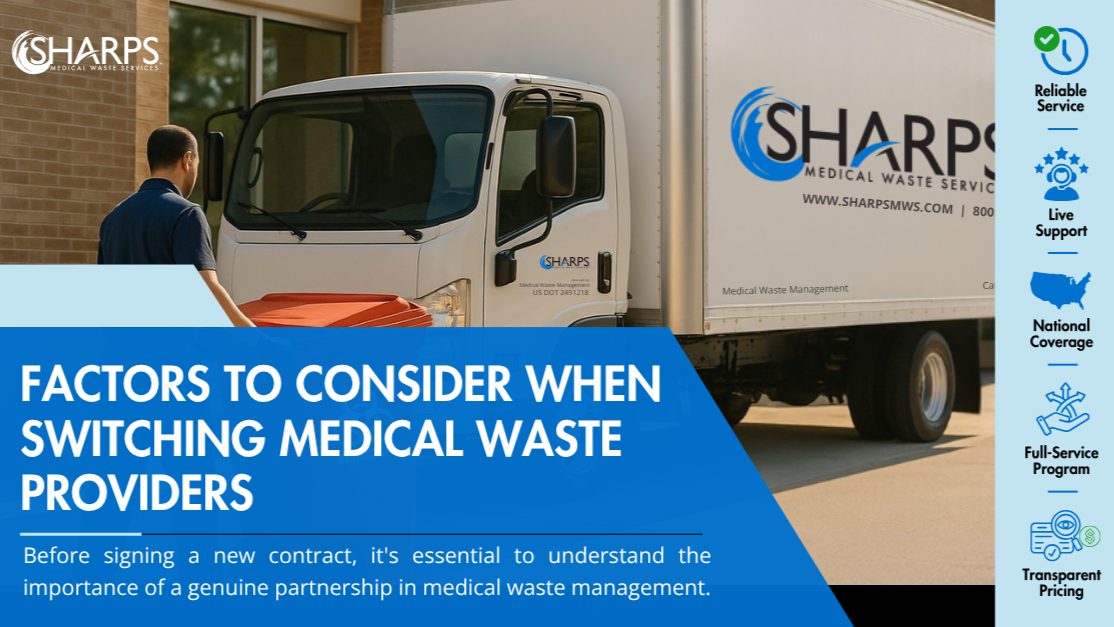
October 14, 2025 Factors to Consider when Switching Medical Waste Providers: Vendor vs Partner Before signing a new contract, it’s essential to understand the importance of a genuine partnership in medical waste management and the distinction between vendor and partner. Partnership is an overused word in business. It appears in proposals, presentations, and taglines so often that it has lost its precision. Yet in highly regulated, safety-critical industries: healthcare, veterinary medicine, laboratories, mortuary services, and manufacturing, the distinction between a vendor and a true partner becomes clear the moment a problem arises. In healthcare, relationships define outcomes. Behind every safe patient environment is a network of suppliers, contractors, and service providers who keep operations running smoothly. But not all relationships are created equal. A vendor delivers what was ordered. A partner strengthens the working relationship Some companies deliver what’s on the invoice and move on. Others integrate, anticipate, and stay accountable. The distinction between a vendor and a partner becomes clear the moment something doesn’t go as planned. The difference matters because the work itself carries weight. When organizations manage medical, hazardous, or bio-contaminated materials, accountability cannot be solely shared by contract alone. Vendor Responsibility Stops at the Contract Several years ago, a hospital used two different providers: one for medical waste and another for municipal disposal. Staff, after working arduous hours during peak season, accidentally disposed of regulated medical materials in the municipal waste dumpster. When the error was discovered, both vendors refused to intervene. The municipal company lacked the licensing to handle medical waste, and the medical waste company declined to collect a container it did not own. The material sat in limbo. The situation became a standoff in which every party could justify its position, but no one was willing to take ownership of the risk. The waste remained on-site until additional resources were brought in at significant expense and delay. The CEO’s reflection, “everyone needs a partnership, but no one wants to pay for it,” captures the challenge precisely. Partnership often requires investment, both financial and relational, that extends beyond the written agreement. The cost of partnership is predictable, while the cost of its absence is not. This kind of scenario is not uncommon. The U.S. Environmental Protection Agency (EPA) reports that facilities generating regulated medical waste face an average of $37,000 in fines per violation when mismanagement occurs (EPA, 2024). When systems are fragmented, the question of responsibility becomes blurred. In critical environments, that uncertainty is a liability in itself. Incidents like these incur fines, remediation, and reputational damage that quickly exceed any savings achieved through transactional procurement. Studies by organizations such as Healthcare Without Harm indicate that hospitals implementing integrated sustainability and waste management partnerships achieve 10-20% reductions in waste-related operational costs, driven by fewer compliance issues and greater operational efficiency. The data support what experience confirms: partnership pays for itself in continuity. Partners Solve Problems So You Don’t Have To Partnership requires a different posture toward responsibility. It is not the avoidance of blame but the assumption of it. A partner recognizes that solving a problem safely and in compliance is more valuable than proving who caused it. At Sharps Medical Waste Services, our teams have encountered versions of this scenario many times. The difference lies in our response. When similar incidents occur, we intervene, collect the compromised material, sort, weigh, tag, track, and treat every item through compliant channels. It is time-consuming and, in some cases, unprofitable. Yet it restores compliance, prevents escalation, and protects the facility’s staff and reputation. True partnership is built on alignment and a shared commitment to protect people, reputations, and, in full transparency, the bottom line. In medical waste management, partnership means: Reliability that anticipates. Pickups on schedule, with capacity to scale when patient volumes rise. Transparency that builds trust. Clear documentation, accessible records, and open communication. Compliance that protects. Systems are designed around regulation, not adjusted after violations occur. Simplicity that empowers. Tools and processes that make the work of healthcare staff easier, not harder. These principles are the foundation of sustainable operations. the kind that keep facilities prepared, even in high-demand seasons. A Partnership That Withstood The Pressure During the height of the 2023-2024 flu season, a regional healthcare network experienced a surge in vaccination volume that overwhelmed its disposal capacity. Container overflows, delayed pickups, and inspection concerns began to surface simultaneously across multiple locations. When flu season peaks, you need a waste PARTNER that can withstand the rising volume. Instead of waiting for failures to compound, Sharps restructured the collection schedule within 48 hours. Additional staff were dispatched, and route pickups were adjusted dynamically to match the increased patient throughput. Using SharpsTracer, each load was documented in real time to maintain complete traceability. No compliance citations were issued. No waste remained unsecured. The client’s infection control officer later noted that the system “held up under pressure precisely because the partnership model allowed it to bend without breaking.” This operational stability defines the essence of partnership. It prevents disruption not by reacting quickly, but by being deeply embedded to anticipate future challenges. Partner or Vendor: Why the Distinction Matters Organizations across sectors are beginning to recognize that the lowest-cost provider is rarely the most reliable one. Research from environmental and healthcare management organizations consistently shows that fragmented waste systems create greater compliance risk. Facilities using multiple vendors often face coordination gaps and inconsistent documentation. Integrated partnerships reduce compliance incidents and operational errors by improving documentation and oversight, effects widely reported in benchmarking analyses by the World Health Organization. The difference was attributed to gaps in coordination, inconsistent reporting, and unclear lines of accountability. Partnership reduces this risk by aligning incentives. The partner’s success is linked to the client’s continuity. In contrast, the vendor’s success is measured by the completion of contracts. This principle applies far beyond healthcare. In veterinary practices, consistent waste removal ensures compliance with both medical and environmental standards. In mortuary services, reliable handling is essential for upholding public and professional trust. In laboratories and manufacturing, timely disposal prevents contamination that can invalidate research or disrupt production. In every case, the goal is not simply disposal, but assurance. Why Sharps Leads with Partnership and Supports with Integrated Services Sharps Medical Waste Services was founded on a simple premise: protecting people. Partnership is the model we’ve refined for more than 30 years. Our systems are designed to simplify the work of professionals across industries. They are compliant, cost-effective, and supported by teams trained to adapt in real time to changing circumstances. We measure success not by the absence of errors, but by how effectively we help resolve them. That partnership standard has guided our work for more than thirty years and is a responsibility we choose to uphold every day. > Thinking About Changing Your Medical Waste Provider? Connect with a Sharps Expert. — About Sharps Medical Waste Services Sharps Medical Waste Services (MWS) is a leading, U.S.-based provider of regulated medical waste management and compliance solutions, serving healthcare facilities, pharmacies, laboratories, and businesses nationwide. The company is committed to protecting public health through safe, compliant, and reliable waste handling services, supported by rigorous regulatory standards, operational excellence, and a customer-focused service model. For more information, please visit sharpsmws.com. Media Inquiries (281) 901-7619 [email protected] Read More
September 30, 2025 When Flu Season Peaks, Waste Systems Are Put to the Test On a weekday morning in late October, the line at a neighborhood pharmacy snakes past the shelves of cold medicine. Parents bring children in for flu shots, older adults wait patiently for their turn, and behind the counter, the pharmacist moves quickly from one patient to the next. By noon, dozens of doses have been given. In the early days of flu season, the focus is on prevention. Pharmacies promote vaccinations, clinics extend hours, and hospitals prepare for an influx of patients. A single busy pharmacy can generate hundreds of used needles in a week. Multiply that by thousands of pharmacies and clinics, and the scale becomes clear. Every act of prevention also creates a responsibility: waste must be managed safely, reliably, and in full compliance. Rising Volumes, Rising Stakes Across U.S. hospitals, more than 5 million tons of waste are generated annually, an average of 29 pounds per bed, per day. This level of volume underscores how flu season surges strain disposal systems. More patients mean more regulated waste. When waste streams swell during flu season, facilities without strong systems encounter problems quickly. Containers fill faster than expected. Pickups scheduled for normal operations no longer keep pace. Staff face decisions about where to place excess material, and compliance gaps open. These are not small inconveniences. The effects ripple outward. An overfilled container becomes a safety hazard for the person asked to move it. A delayed pickup can place a facility at risk during an inspection. Even small breakdowns add pressure at a time when healthcare workers already carry demanding loads. What Reliable Service Provides Effective waste management in this context is not limited to convenience. It is a safeguard that protects staff, patients, and the organization itself. Reliable service during flu season means: Collections that adapt to higher volumes without disruption. Containers and liners that are designed to withstand greater use. Records that document every step, ready for any audit. Processes that support infection control rather than compromise it. When those elements are in place, healthcare teams stay focused on patient care rather than the risks accumulating in storage rooms and hallways. The Sharps Commitment Sharps Medical Waste Services is built to perform under pressure, with programs structured to keep pace with seasonal surges. Our containers are engineered to protect against leaks and punctures and withstand the demands of higher use. SharpsTracer documentation systems provide clear visibility from pickup through treatment. And our service teams are trained to anticipate needs before problems arise. For healthcare leaders, this level of reliability is essential. It is what allows the focus to remain where it belongs: delivering safe, effective care during the most demanding months of the year. Preparing for the Season Ahead Flu season will always test the resilience of healthcare systems. Facilities that prepare for higher volumes protect their staff, remain compliant, and avoid costly setbacks. Reliable waste management is part of that preparation. Sharps provides the assurance that every container is serviced, every record is accurate, and every detail will meet the standard required. That assurance is what lets clinical priorities take precedence, even when the season is at its peak. >> Request a quote today and prepare your facility for flu season. Read More
August 21, 2025 The Six-Figure Cost of Small Mistakes: How Proper Medical Waste Disposal Protects Your Bottom Line In healthcare, the smallest details often determine the biggest outcomes. A mislabeled bag, an overfilled container, a shipment sent to the wrong facility, each seems minor in isolation. Yet when repeated, these oversights can reshape balance sheets, disrupt operations, and erode public trust. Waste disposal is rarely the subject of boardroom debate. It does not command the same attention as new surgical technology or patient experience initiatives. But the record shows that what happens after a procedure ends has a direct line to financial performance and public confidence. When Errors Multiply In 2023, Minnesota regulators fined a hospital $100,000 after discovering that infectious waste had been routed to a non-compliant facility (Star Tribune, 2023). The issue was not spectacular in scale. It was the product of ordinary mistakes, oversights in the process that grew into a sanction with real financial and reputational costs. This is a familiar pattern. Across the healthcare sector, compliance failures seldom begin with willful neglect. They begin with shortcuts, inattention, or systems that fail to adapt to increasing waste volumes. Each decision may save a minute or a dollar in the short term, but over time, the accumulation becomes costly. The Dimensions of Cost The true expense of improper medical waste disposal extends far beyond the fine itself. It touches four critical dimensions of organizational performance: Financial exposure: Fines and penalties vary, but they can escalate into the millions. Insurers may also limit coverage and increase premiums when violations occur. Operational disruption: Investigations trigger retraining, procedure rewrites, and additional audits, pulling staff away from patient care. Reputational impact: Communities expect healthcare institutions to model safety. When waste makes headlines, trust declines quickly and is slow to return. Legal liability: Exposure events can lead to civil claims and settlements, each with its own financial and reputational weight. The combined effect is rarely visible in a single line item. It appears in staff turnover, erosion of goodwill, and hesitation from partners and patients. Why Prevention is an Investment The alternative is not glamorous, but it is effective. Organizations that invest in reliable medical waste disposal systems preserve both safety and financial resilience. Predictable service models such as mail-back programs or scheduled route pickups align costs with actual waste volumes. Documentation platforms like SharpsTracer provide end-to-end visibility, ensuring proof of compliance is always available. Standardized processes reduce the need for emergency interventions, allowing staff to focus on patients rather than paperwork. The economics are straightforward: preventing a problem is consistently less expensive than correcting one. That’s why choosing the right waste management partner is important. Beyond Compliance Proper disposal reflects an institution’s priorities. It shows that safety and accountability extend from the point of care to the last mile of handling. It protects the workforce and the institution’s promise to its community. For leadership, the directive is clear. Build systems that make the right action routine. Measure them with the same discipline given to clinical quality and patient outcomes. Sharps Medical Waste Services supports your facility’s needs with reliable programs, clear documentation, and tools designed to prevent small errors from becoming large costs. Trust is built in the details, and reliable waste management is the standard. >> Protect your bottom line with compliance solutions from Sharps — About Sharps Medical Waste Services Sharps Medical Waste Services (MWS) is a leading, U.S.-based provider of regulated medical waste management and compliance solutions, serving healthcare facilities, pharmacies, laboratories, and businesses nationwide. The company is committed to protecting public health through safe, compliant, and reliable waste handling services, supported by rigorous regulatory standards, operational excellence, and a customer-focused service model. For more information, please visit sharpsmws.com. Media Inquiries (281) 901-7619 [email protected] Read More
September 28, 2022 Hazardous Waste in the Solid Waste? Retailers & Smaller Companies May Face Fines & Penalties Retailers face many challenges: staff retention, rising prices, product shortages, transportation delays, and more. When you’re racing to get new hires trained on basic tasks – how to stock shelves and run the register – who has time to worry about what they’re throwing in the dumpsters? Every store manager and corporate compliance department should worry. Improper disposal of regulated wastes can expose sanitation workers to dangerous substances and harm both water quality and wildlife. State and local regulators take these issues seriously – retailers should too. Many Retailers Make Disposal Mistakes – and Pay the Price Improper waste segregation isn’t a new problem. Many large retailers have faced substantial fines when employees mixed hazardous and universal wastes with regular trash. For example: In 2013, a large big box retailer of general merchandise and groceries paid $81.6 million in fines after employees in California and Missouri stores improperly disposed of “fertilizer, pesticides and other hazardous products” by placing these hazardous materials in regular trash dumpsters or pouring them into the sewer. In 2020, another specialty retailer paid California a $1.4 million settlement after “electronic items and hazardous waste, including lithium batteries and a small can of lighter fluid” mixed with regular trash ignited a fire at a local waste handling facility. A few months later, another fire started in a dumpster behind a store in Oxnard, CA. “Investigators inspected the waste and again and discovered numerous items of regulated waste, including batteries, broken compact fluorescent bulbs and various discarded electronic devices.” In 2021, California officials filed a statewide lawsuit against a large big box retailer alleging that the company “illegally dumped nearly 160,000 pounds of hazardous waste, or more than 1 million items, each year in California over the last six years.” In 2020, a large pharmacy agreed to settle allegations after California prosecutors accused the company of “unlawfully [disposing] of hazardous waste in violation of state laws and injunctive terms from a 2012 stipulated judgment.” Smaller companies are also at risk if they don’t follow state and federal regulations regarding the classification, storage, and disposal of hazardous wastes. In 2021, a North Carolina e-waste recycler pled guilty after being charged with violating EPA regulations regarding the proper storage of hazardous waste. In 2022, the Oregon Department of Environmental Quality fined an Albany painting and construction company $17,200 for illegally disposing of hazardous waste on the company’s property and failing to make “hazardous waste determinations on wastes generated” by the business. Employee Training on Proper Waste Segregation and Disposal Is Critical No business wants to contaminate the local community with hazardous wastes or expose workers to potential harm. Still, it does happen – often because many employees aren’t adequately trained on waste identification, segregation, and disposal. Retailers deal with a wide variety of products, many of which don’t seem hazardous to laypeople, so employee training is critical. According to the Retail Compliance Center: “Many household products sold in retail grocery stores may need to be handled as hazardous or universal waste when returned, expired, recalled, or damaged. Hazardous waste items can be found in several product categories, including aerosol sprays, hair dyes, detergents, cosmetics, fragrances and perfumes, and cleaners. Universal waste items defined by the federal regulations include certain types of batteries, light bulbs, mercury-containing devices (e.g., thermometers), certain recalled or unused pesticides, and aerosol cans. Universal waste regulations can vary from state to state, and some states may allow additional wastes to be handled as universal wastes, such as electronics. ” High employee turnover further complicates compliance because stores constantly have to train new employees. According to the Bureau of Labor Statistics, retail turnover in the retail trade was 64.6% in 2021. In particular retail segments, it’s much higher. In 2021, convenience stores experienced a 119% turnover rate for full-time employees and 182% turnover for part-time workers. Sharps Compliance Is a Hazardous Waste Disposal Partner You Can Depend On Hazardous and universal waste disposal is subject to multiple state, local, and federal regulations. Federal and state hazardous waste classifications may differ, with state laws being more stringent. What’s more, regulations change frequently, and it’s hard to wade through the bureaucratic language to understand what you need to do to comply. Who has time to keep up with all this? Sharps Compliance does. We provide the tools you need to comply with regulations regarding required employee training as well as the storage, labeling, transportation, and treatment of many different regulated wastes Visit our knowledge base of hazardous waste articles and guides to learn more about hazardous waste classification, RCRA guidelines, and other topics. Whether you manage a nationwide retailer, a statewide chain, or a local business, Sharps Compliance can help you protect your employees, community, and the environment while complying with applicable regulations. Contact us at 800.772.5657 for more information, or visit our customer center for more information or customer support. Read More
September 14, 2022 How Purge Shredding Helps Increase Company Data Security and Protect Privacy Keeping consumer and company data secure is more than just a good business practice – it’s a requirement in many industries per state and federal laws. For example, in healthcare, data security keeps protected health information (PHI) and Personal Identifiable Information (PII) from improper disclosure and use through compliance with HIPAA Laws. Purge shredding, also called one-time shredding, is an important tool that helps large and small organizations protect data security and data privacy. Use Purge Shredding to Protect Company Security and Trade Secrets Corporate espionage is a reality, and it takes many forms. It may be high-tech (infecting a competitor’s network with malware) or more cloak-and-dagger-type activities like breaking into an office or receiving stolen information from an employee. Sometimes the organization just makes it easy for data thieves. Employees may leave sensitive documents unattended on desks, speak too freely in public places, or place important documents in regular trash cans or recycling bins. Competitors don’t have to break into your office if they can just open up your dumpster and look at patient records, test results, or sensitive business documents. Protect your patient’s PHI and your company’s sensitive data with clearly-defined document handling, data retention, and security policies and procedures. Train new employees on data security and privacy. Keep data management procedures updated and provide refresher training for all employees as needed. Store confidential documents in locked rooms or cabinets. Never leave them unattended in offices, conference rooms, or public places. Label and color-code all trash, recycling, and shredding disposal containers so employees can easily identify them. Maintain a regular purge shredding schedule to ensure that documents are destroyed when no longer needed. Always provide secure, locked containers to hold confidential documents that are awaiting shredding. This helps keep offices and storage areas uncluttered and reduces the danger that sensitive information will fall into the wrong hands. Comply with State and Federal Consumer Privacy Laws Large online data breaches resulting from cyber attacks draw the most media attention because of the number of people affected. In 2020, significant cyber breaches “exposed patient data of more than 22 million Americans.” The targeted companies and organizations suffer from loss of customer trust, reputational damage, and regulatory scrutiny. Data breaches are expensive too. In 2020, the average cost of an online data breach increased by 10%, with lost business costing the most – an average total cost of $1.59 million per incident. However, as with a company’s internal data security, a data privacy breach doesn’t have to come from a sophisticated corporate spy or cybercriminal. Sometimes it happens when employees mix sensitive documents containing PII or PHI with regular trash or recycling. Those mistakes are also expensive. A national document search company paid a $500,000 fine for violating the Kansas Consumer Protection Act when it failed to “shred or remove personal information, such as social security numbers or credit card numbers, before disposing of the records” in “public trash bins across Topeka.“ A large retailer paid $9.87 million to settle a California case after workers were found to have placed “potentially hazardous materials into common dumpsters and disposing of medical records from pharmacies — which contained patients’ names, phone numbers and addresses — without shredding them, putting customers at risk of identity theft.“ Documents containing any PII or PHI must be shredded and disposed of in a regulatory-compliant manner. Whether you need one-time shredding or a regular purge shredding schedule, a shredding company can help your company comply with data privacy regulations and disposal requirements. Comply with HIPAA Requirements HIPAA, the Health Insurance Portability and Accountability Act, was passed in 1996, and the rules went into effect in 2003. The HIPAA Privacy Rule “requires appropriate safeguards to protect the privacy of protected health information and sets limits and conditions on the uses and disclosures that may be made of such information without an ‘individual’s authorization.” The law is designed to protect healthcare patients’ privacy through proper document management and disposal. Entities that violate HIPAA provisions may face both civil and criminal penalties. Although HIPAA is a federal law, some states also impose their own penalties for privacy violations. For example: A medical billing company and the doctors who provided patient information to the company paid a state fine of $140,000 after more than 67,000 medical records containing patients’ names, addresses, and social security numbers were deposited in a public dump. A medical practice paid $400,000 to settle a class action suit after documents containing patients’ names, addresses, social security numbers, and insurance information were discarded in a dumpster and subsequently spread by the wind throughout the surrounding neighborhood. Learn more about Sharps Compliance’s HIPAA-compliant shredding services. How to Choose a Purge Shredding Service Sharps Compliance is a full-service provider of medical, hazardous, and pharmaceutical waste management solutions. In selected markets, we also provide purge shredding services. We can supply your facility with everything you need to securely collect and store documents that contain PII and PHI. Our one-time purge shredding services can help you protect your data and comply with regulations. Secure containers for document collection We accept all paper products that contain PII and PHI Scheduled pickups Pricing is a flat fee per collection cabinet. There are no surcharges or hidden fees. All document destruction takes place at a NAID-approved facility. We provide document tracking and Certificate of Destruction documentation you need in case of a HIPAA audit or other legal necessity. Our regulatory-compliant document destruction and purge shredding services are available in select markets. Contact us at 800.772.5657 for more information. Read More